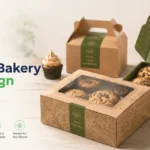
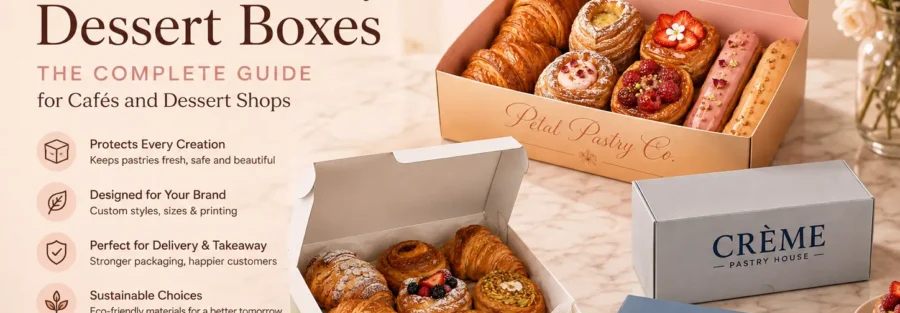
A croissant that arrives crushed. A macaron that slides across the box and cracks. A cheesecake slice that sweats inside plastic and turns soggy before it even reaches the table. None of these are baking mistakes — they’re packaging mistakes. The right pastry boxes protect what your kitchen worked hard to create, and they make your café or dessert shop look as good as the food tastes.
At Eco Packaging America, we design and print pastry and dessert packaging for cafés, bakeries, and dessert shops every day. We’ve seen what breaks in transit, what keeps things fresh, and what makes a customer stop and take a photo before they even open the box. This guide shares all of it, in plain, simple language.
In This Guide
- Why pastry box choice matters more than people think
- Box options for pastries and desserts
- Matching the box to the dessert
- Keeping pastries fresh inside the box
- Packaging for delivery apps
- Presentation ideas for cafés
- Eco-friendly pastry packaging
- Cost vs. return
- Pros and cons, expert tips, and FAQs
Quick Answer
Choose the box style by how fragile and greasy the item is: window boxes for visual appeal, clamshells for delicate items that must stay upright, tray-and-sleeve for assortments, tuck boxes for gifting, and single-portion boxes for delivery. Then add the three details that actually prevent damage — a grease-resistant liner, ventilation for crusty items, and an insert sized to the product.
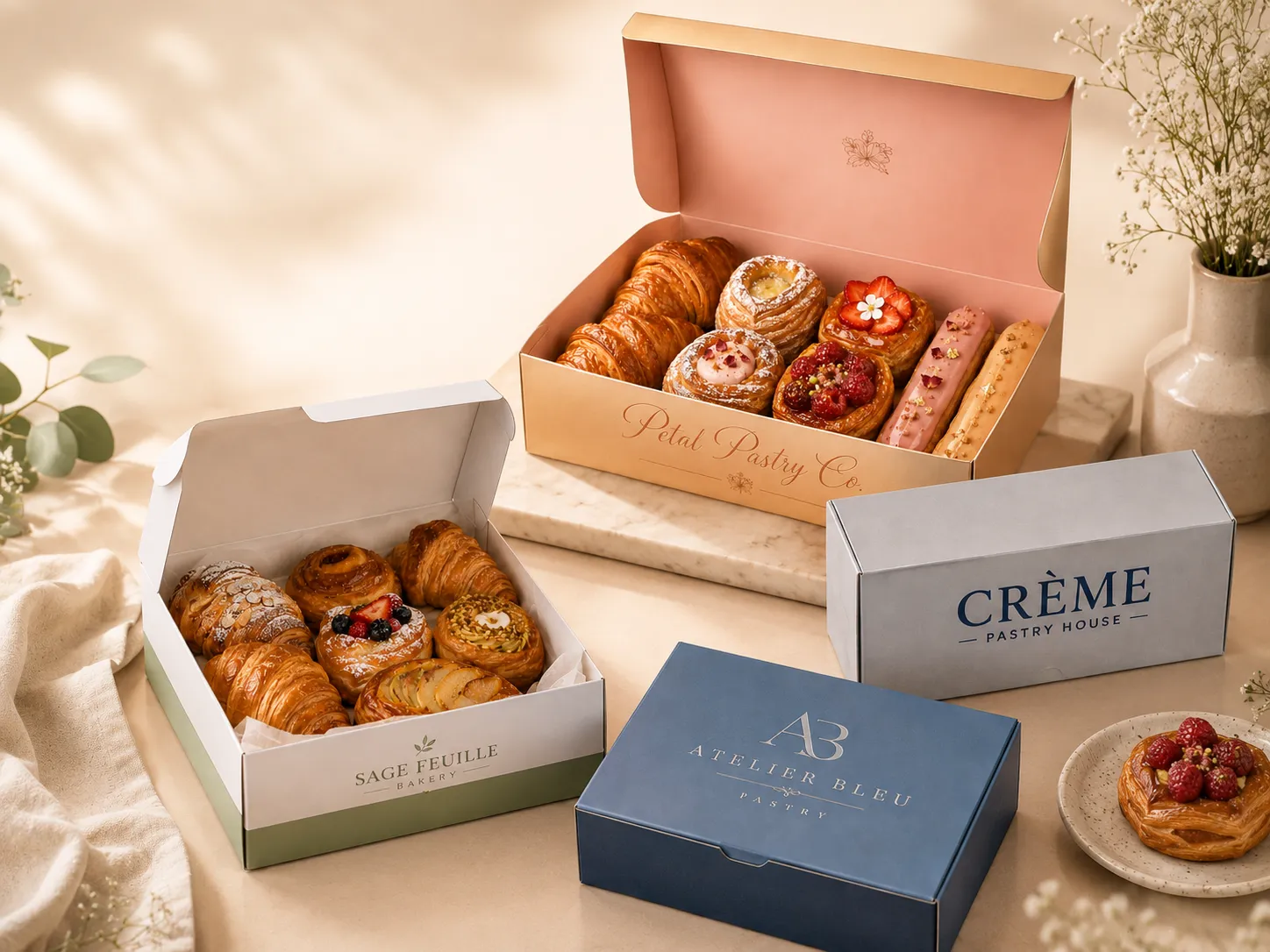
Why Pastry Box Choice Matters More Than People Think
Pastries and desserts are fragile, sticky, greasy, and often delicate to look at. A box that works fine for a sandwich shop will fail for a bakery. Choosing the right custom pastry box for bakery items isn’t just about looks — it’s about whether the product survives the trip from counter to customer in one piece.
This is exactly why so many café owners now look for the best pastry boxes for cafés and dessert shops instead of grabbing any generic box from a wholesale supplier. The box has become part of the product experience, not just a container.
The stakes are measurable. Research on delivery experiences found that items arriving in poor condition (57%) and damaged packaging (34%) are among the top reasons diners complain, request a refund, or cut a tip — and more than half of customers blame the restaurant, not the delivery app, when an order goes wrong. For a dessert shop, a crushed éclair is rarely just one refund; it’s a review and a lost regular.
Box Options for Pastries and Desserts
Different desserts need different box styles. Here’s a simple breakdown.
Window boxes
A clear plastic or PLA window lets customers see the product before opening it. Great for cupcakes, danishes, and colorful pastries where visual appeal drives the sale.
Clamshell boxes
A hinged, all-in-one box with no separate lid to lose. Perfect for delicate items like eclairs, cream puffs, or slices that need to stay upright.
Tuckable gift boxes
No tape needed; the box folds and locks itself shut. Ideal for gifting occasions — birthdays, holidays, or premium dessert boxes.
Tray + sleeve combos
A sturdy tray insert slides into a printed sleeve. Common for cookie assortments, macaron sets, and mixed pastry boxes.
Individual portion boxes
Small, single-serving boxes for one cupcake, one slice, or one pastry — popular for delivery apps and grab-and-go counters.
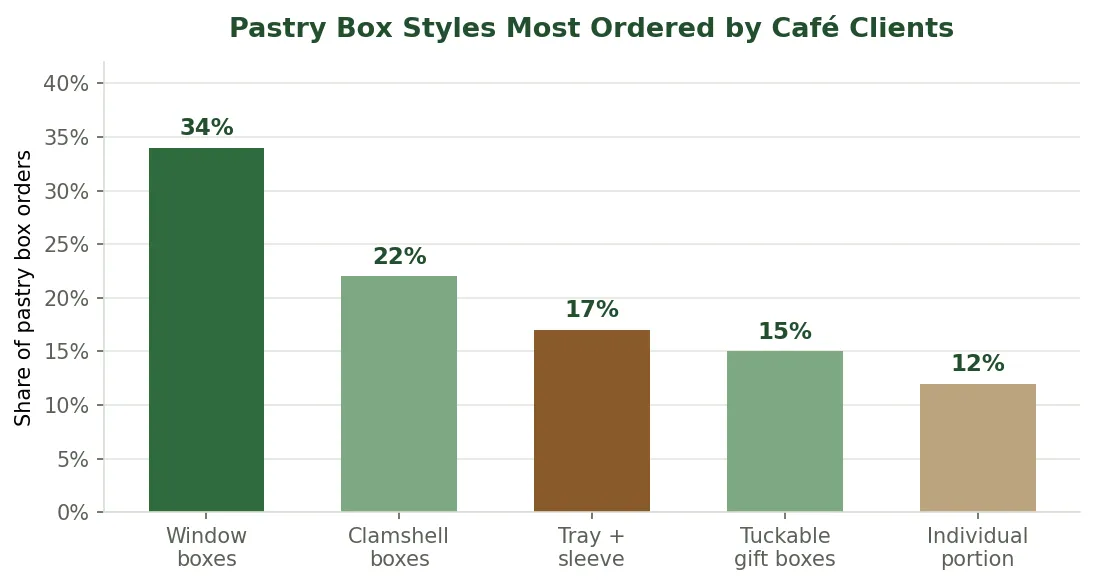
Bar chart showing window boxes as the most ordered pastry box style, followed by clamshell, tray and sleeve, tuckable, and individual portion boxes
Chart 1: Pastry box styles most ordered by our café clients, based on Eco Packaging America’s own order mix rather than an industry-wide survey. Window boxes lead because they do double duty — protecting the pastry while acting as a mini display case.
Matching the Box to the Dessert
The fastest way to choose is to start from the product, not the catalog. This table covers the items cafés ask about most.
| Dessert | Main risk | Best box setup |
| Croissants, danishes, crusty bakes | Grease seepage, soggy crust | Ventilated box + grease-resistant liner |
| Cupcakes | Frosting contact, tipping | Window box + cupcake insert |
| Macarons, cookies (assortment) | Sliding, cracking | Tray + sleeve with fitted cavities |
| Éclairs, cream puffs | Crushing, rolling | Clamshell with shallow insert |
| Cheesecake, mousse, cream slices | Melting, sweating | Insulated or double-wall box + snug insert |
| Single slice or pastry (delivery) | Shifting in a large box | Right-sized individual portion box |
| Gift and holiday assortments | Presentation, opening damage | Tuck box + tray insert + sleeve |
The pattern worth noticing: almost every fix is an insert or liner decision, not a “buy a thicker box” decision.
Keeping Pastries and Desserts Fresh Inside the Box
Freshness isn’t only about the recipe. It’s also about airflow, moisture control, and how tightly the box holds the product in place. A few simple rules make a big difference:
- Ventilation matters for baked goods. Croissants, breads, and anything with a crust need small air vents in the box, or steam gets trapped and turns a crisp crust soggy.
- Grease-resistant liners protect the box itself. Butter-heavy pastries like croissants and danish need a liner or coating so oil doesn’t soak through and weaken the box.
- Inserts stop sliding and crushing. Macarons, cupcakes, and delicate slices need molded inserts or dividers — without them, items shift around and crack during delivery.
- Cold items need insulation, not just a box. Cheesecakes, mousse cups, and anything with cream needs an insulated or double-wall box if it’s traveling any real distance, especially in warm weather.
- Never box anything still warm. Residual heat becomes condensation, and condensation ruins both crust and print. Cool fully first.
This is where a custom dessert box with insert setup earns its keep — a small design detail that prevents most of the damage we see in delivery orders.
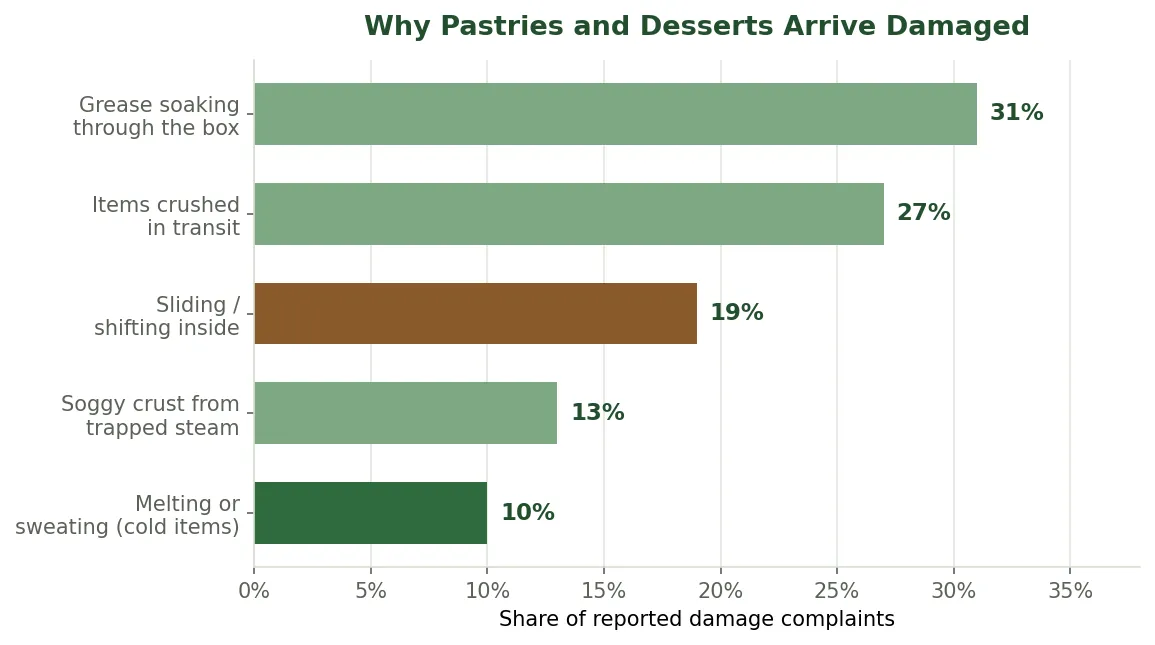
Horizontal bar chart of the top reasons pastries and desserts arrive damaged, led by grease soaking through and items crushed in transit
Chart 2: The damage causes we see most often with café and bakery clients, based on our own order and complaint patterns. Grease seepage and crushing lead — and both are solved by the right liner and insert combination, not a stronger box alone.
The ventilation trade-off nobody mentions
Vents keep crusty items crisp, but they work against you on cream, mousse, and refrigerated desserts, where airflow speeds drying and lets odors in. If you sell both, you need two box specs — not one compromise box. Trying to serve croissants and cheesecake from the same ventilated stock is one of the most common mistakes we see.
Packaging for Delivery Apps
Delivery is harsher than pickup: bags get tilted, stacked, and set down hard, and the customer judges your bakery, not the driver. A few adjustments make the difference:
- Right-size the box. Excess space is where items slide and crush. Consumers notice oversized packaging too — a Shorr Packaging report found 87% say they’ve received items in boxes far too large for the product.
- Use tamper-evident closures or a seal sticker. It reassures the customer and doubles as branding.
- Keep the box flat-stackable. Drivers stack; a box that can’t take a little weight will fail.
- Separate hot and cold items. Never let a warm bake share a box with a chilled dessert.
- Label fragile and orientation. A simple “this way up” printed on the lid costs nothing and works.
Presentation Ideas for Cafés and Dessert Shops
A pastry box is free marketing every time a customer carries it out the door or posts it online. A few low-cost presentation upgrades go a long way:
- Add your logo and a short tagline to the lid — simple, centered, and clean.
- Use a ribbon or twine tie for gift-style dessert boxes.
- Match box color to your café’s interior or brand palette for a consistent look.
- Add a small “handle with care” or “best enjoyed within” note — it feels thoughtful, not just functional.
- Consider a seasonal box design for holidays without reprinting your entire packaging line.
These small touches are why cafés increasingly look for elegant dessert box presentation ideas — presentation now sells almost as much as the pastry itself. The research supports it: a 2018 Ipsos survey for the Paper & Packaging Board found 72% of Americans say packaging design influences their purchase decisions, rising to 81% for gift purchases. A separate VistaPrint survey found 64% of consumers have kept a piece of branded packaging after opening it.
Seasonal designs without reprinting everything
Keep one core branded box and change the accents — printed sleeves, belly bands, or stickers carry the seasonal theme. You get four fresh looks a year at roughly the cost of a label change, and your brand recognition stays intact because the box itself never changes.
Eco-Friendly Pastry Packaging
Sustainable options are widely available for pastry packaging, and they suit the artisan look most cafés want:
- Recyclable kraft board for a natural, warm appearance.
- FSC-certified paperboard where you want certified fiber sourcing.
- Compostable or PLA window film instead of standard plastic windows.
- Soy-based or low-migration inks that keep the box food-safe and recyclable.
- Right-sized boxes, which cut material use and protect better than an oversized box.
One honest caveat: grease-resistant coatings and window films vary in how they affect recyclability, so ask your supplier what’s genuinely recyclable in practice and label it accurately. Specific, truthful labeling builds more trust than a vague green claim.
Cost vs. Return
Custom pastry boxes cost more per unit than plain stock. The return shows up in three places:
- Fewer damage complaints. Liners and inserts cut the refunds, remakes, and bad reviews that come from crushed or greasy deliveries.
- Higher perceived value. Presentation supports premium pricing on gift boxes and specialty desserts.
- Free marketing. A branded box travels, gets photographed, and gets kept.
You don’t need every upgrade at once. Start with the two that prevent the most damage — a grease-resistant liner and a properly sized insert — then add printing and finishes as volume grows.
Pros and Cons of Custom Pastry & Dessert Boxes
| Pros | Cons |
| Keeps fragile pastries and desserts intact during delivery and pickup | Custom printed boxes cost more upfront than plain stock boxes |
| Improves shelf appeal with window and printed box options | Specialty inserts add a small extra cost per unit |
| Builds brand recognition every time a customer carries or shares the box | Bulk custom orders need lead time — not ideal for last-minute needs |
| Reduces refund and complaint rates tied to damaged or soggy items | Ventilated boxes aren’t suitable for humid or wet-item desserts without liners |
| Supports premium pricing for gift and specialty dessert boxes | Multiple product types may require more than one box spec |
Expert Tips at a Glance
- Cool everything fully before boxing — trapped heat becomes condensation, and condensation ruins crust and print. 2. If you sell both crusty and creamy items, budget for two box specs rather than one compromise. 3. Size the insert to the product, not the box — that single fix solves most sliding and cracking. 4. Test a packed box the way a driver handles it: tilt it, stack something on it, carry it in a bag. 5. Put your “best enjoyed within” note on the lid; it manages expectations and reads as care.
Key Takeaways
- Match the box style to the dessert’s real risk: grease, crushing, sliding, or melting.
- Liners, vents, and inserts prevent more damage than a thicker box does.
- Ventilation helps crusty bakes and hurts creamy desserts — don’t use one spec for both.
- Delivery needs right-sizing, stackability, and a seal; the customer blames your shop, not the driver.
- Presentation drives purchases and gets kept, so treat the lid as marketing space.
- Start with liner and insert, then add finishes as volume grows.
Where Eco Packaging America Fits In
Plenty of suppliers sell plain pastry boxes. Very few combine eco-friendly, recyclable materials with grease-resistant liners, ventilation options, and custom inserts — all without slowing down your order or charging premium pricing for it. That’s the gap Eco Packaging America fills: boxes that keep pastries fresh, look great on a café counter, and hold up in real delivery conditions, not just in a product photo.
Frequently Asked Questions
What type of box is best for pastries? Window boxes are the most popular overall because they show off the product while still offering solid protection, which makes them ideal for cupcakes, danishes, and colorful pastries. Clamshells work better for very delicate items like cream puffs and éclairs that need to stay upright and can’t risk a lid pressing down. For assortments, a tray-and-sleeve combo keeps everything in place. Choose based on how fragile and how photogenic the item is, then add a liner or insert as needed.
How do I keep pastries fresh in a box during delivery? Use a grease-resistant liner so butter doesn’t soak through, add small ventilation holes for anything with a crisp crust, and secure items with an insert so they don’t shift in transit. Let everything cool completely before boxing, since trapped heat turns into condensation and softens crusts. For cream-based or refrigerated desserts, use an insulated or double-wall box instead of a vented one, and keep hot and cold items in separate boxes.
What’s the difference between a clamshell box and a tuckable box? A clamshell is a single hinged piece with no separate lid, so there’s nothing to lose and nothing to press down on delicate items — ideal for éclairs, cream puffs, and slices. A tuckable box has a fold-and-lock lid that closes without tape, which makes it better for gifting, stacking, and retail display. Clamshells prioritize protection and speed at the counter; tuck boxes prioritize presentation and a cleaner branded surface.
Do pastry boxes need ventilation holes? For anything with a crisp crust, yes. Bread, croissants, and danish pastries trap steam as they cool, and without vents that steam condenses and turns the crust soggy. But ventilation is not universally good: airflow dries out cream, mousse, and refrigerated desserts and lets odors in. If your shop sells both crusty and creamy items, plan on two box specs rather than forcing one ventilated box to serve everything.
Can custom pastry boxes be eco-friendly? Yes. Recyclable kraft board, FSC-certified paperboard, soy-based or low-migration inks, and compostable or PLA window film are all common options. Right-sizing your boxes also cuts material use while protecting the product better than an oversized box. One caveat worth checking: grease-resistant coatings and window films vary in how they affect recyclability, so ask your supplier what’s genuinely recyclable in practice and label it accurately rather than making a general green claim.
What size box do I need for cupcakes? Individual portion boxes work well for single cupcakes, especially for delivery apps and grab-and-go counters. For bulk and party orders, a 6 or 12-cupcake insert tray fits most standard sizes. The critical measurement is height — including tall frosting or a topper — because that’s the dimension most often forgotten, and it’s the one that ruins a cupcake when the lid presses down. Always test with your actual cupcakes before ordering in volume.
How do I stop desserts from sliding around in the box? Use molded or die-cut inserts sized to the exact product. This is the single biggest fix for cracked macarons and shifted cupcakes, and it matters more than box thickness. Right-sizing the box helps too, since excess empty space is exactly where items slide and collide. Test a packed box the way a delivery driver would handle it: tilt it, carry it in a bag, and set something on top. If anything moves, the insert needs adjusting.
Are custom dessert boxes expensive for a small café? Costs vary by size, style, and finish, but ordering in bulk brings the per-box price down significantly because fixed setup costs spread across more units. Many suppliers also offer smaller minimum orders for new shops, so you can start modestly. The most cost-effective approach is to prioritize the two upgrades that prevent the most damage — a grease-resistant liner and a properly sized insert — and add printing, windows, or premium finishes as your volume grows.
What’s the best packaging for cheesecake slices? An insulated or double-wall box with a secure, tight-fitting insert works best, especially for delivery in warm weather. Cheesecake and other cream-based desserts sweat and soften when they warm up, so avoid ventilated boxes, which speed that up. Keep the slice snug so it can’t tip or slide, never box it warm, and separate it from any hot items in the same order. For longer trips, add a cold pack and be honest with customers about transit limits.
Can I add my logo to pastry boxes? Yes. Most custom pastry boxes support full-color printing, foil stamping, or a simple one-color logo print, depending on your budget. One-color printing on kraft is the most cost-effective and suits an artisan look. Keep the logo readable at small sizes, since pastry boxes are often small, and supply a vector file so it prints cleanly. The lid is prime marketing space, so keep it simple and centered rather than crowding it with detail.
How far in advance should I order custom pastry boxes? Most custom print orders take about one to three weeks depending on box style and finish, and specialty options like windows, inserts, or foil add time. First runs take longer than reorders because they include proofing and setup. Order before your current stock runs low rather than after, and order earlier still ahead of holiday peaks, when production queues fill up. Planning ahead is the simplest way to avoid rush fees that erase your savings.
What’s the most cost-effective pastry box option for a new dessert shop? Simple printed tuck boxes or window boxes give the best balance of presentation and cost for shops just starting out. They look intentional, stack well, and don’t require expensive tooling. Start with one or two box sizes that cover most of your menu rather than a different box for every item, and add a grease-resistant liner where you need it. As volume becomes predictable, step up to larger runs where the per-box price drops.
Final Thoughts
Good pastry packaging isn’t about buying the sturdiest box on the shelf. It’s about matching the box to what the dessert actually struggles with — grease, crushing, sliding, or melting — and then adding the small details that solve it: a liner, a vent, an insert, or insulation. Get those right and most delivery complaints disappear before they happen.
For cafés and dessert shops, the box is doing two jobs at once: protecting fragile work and representing your brand on a counter, in a photo, and on someone’s kitchen table. Custom pastry and dessert boxes are worth it when they do both — and the fastest way to know they will is to pack a real sample and handle it the way a delivery driver would.
Ready to design your pastry boxes? Eco Packaging America produces custom pastry and dessert boxes with grease-resistant liners, ventilation options, custom inserts, recyclable kraft and FSC materials, and food-safe inks — plus a free digital mockup on every custom order. Tell us what you sell and how it travels, and we’ll recommend the right box setup. Get a free mockup and quote today.
About the Author
Eco Packaging America — Packaging Team. Custom Eco-Friendly Packaging Specialists for US Markets. With over 5 years of experience producing custom eco-friendly packaging for US food brands, bakeries, and e-commerce businesses, we’ve helped 200+ American brands create packaging that protects product and sells. We specialize in sustainable kraft, rigid, and mailer box solutions with low minimum orders and fast turnaround.