
Cakes are delicate. Even a beautifully decorated cake can arrive damaged, smudged, or tilted if the packaging isn’t right. Choosing the right cake boxes isn’t just about packing a product — it’s a brand decision. The box your customer opens is often their first hands-on impression of your bakery, and it decides whether the cake survives the trip from your kitchen to their table in one piece.
This guide walks through both jobs a cake box has to do: protect the cake in transit, and present your brand. We’ll cover box types, the right size, the features that actually matter, how to vet a supplier, when to buy wholesale, and the mistakes that quietly cost bakeries money.
In This Guide
- Cake boxes for safe delivery
- Brand presentation — why the box is your first impression
- Types of cake boxes (with a comparison table)
- What size cake box do you need?
- Must-have features in custom cake boxes
- Food safety & grease resistance
- Choosing the right cake box supplier
- Buying cake boxes wholesale: benefits & drawbacks
- Common mistakes to avoid
- Frequently asked questions
1. Cake Boxes for Safe Delivery
Start with the most basic question: how do custom cake boxes actually keep a cake safe on the way to the customer?
If you deliver in a plain, ordinary box, you’re taking a real risk. A flimsy box lets the cake shift, slide, or get crushed — and that usually means smudged frosting and a ruined presentation by the time it arrives.
A lot of small bakery owners avoid custom printed boxes because they assume the cost is too high. That’s not really true anymore. Affordable custom cake boxes are far easier to get than they used to be — you no longer need a big budget or a giant order to get sturdy, branded packaging built for your product.
Weak packaging carries real business costs: refunds, bad reviews, and a cake that never gets photographed or shared, simply because it showed up looking like a mess.
Custom printing helps in a quieter way too. When a manufacturer prints your brand on a box, they rarely use cheap, weak material — their own reputation is riding on it. And the printing, colors, and logo turn a plain box into a free marketing tool. A good bakery always knows exactly what’s printed on its box, how it was printed, and what material was used. That level of detail is just part of running the business the right way.
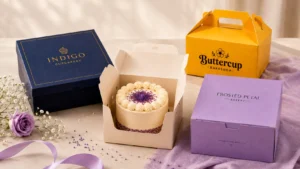
Delivery best practices
Beyond choosing a sturdy box, a few simple habits prevent most transit damage:
- Snug fit + a non-slip base. Size the box to the cake with a little clearance, and set the cake on a grease-resistant base board so it can’t slide.
- Keep it level. Carry and transport cake boxes flat — never on a seat that tilts. A non-slip mat in the vehicle helps.
- Support the corners and lid. Leave enough height so the lid never touches the frosting, and reinforce the base for heavier or tiered cakes.
- Mind the temperature. Buttercream and cream-based cakes soften in heat — keep them cool in transit, especially in summer.
- Add ventilation for warm or humid conditions to stop condensation from making the icing sweat.
2. Brand Presentation: The Box Is Your First Impression
Brand presentation matters more than most bakery owners realize. It’s often the first thing that makes a customer notice — and remember — you. Bakeries that invest in properly branded cake boxes aren’t just selling a product; they’re building a name in the market.
Here’s a simple way to see it. Strong brands sell on their name alone. FIFA spent decades building football into a global brand, and now the 2026 World Cup — hosted across the USA, Canada, and Mexico — makes everything carrying the name sell, from shirts to gear. Rockstar Games has built such a strong reputation that a title like GTA 6 sells on the studio’s name before anyone plays it. The lesson isn’t about games or sports — it’s that consistent presentation, repeated over time, becomes something people trust and pay for.
You can see the same pattern in bakeries. In New York and California, some small bakeries open only twice a week — they spend the rest of the week collecting orders, then deliver everything within two days. Their consistent packaging and presentation are a big reason customers trust them and keep coming back.
The data backs this up. In an Ipsos survey for the Paper and Packaging Board, about 63% of US consumers said paper and cardboard packaging makes a product feel premium, and 69% said it feels more artisanal or handcrafted — exactly the impression a bakery wants. And roughly 40% of shoppers will photograph and share packaging that looks unique or gift-like (Dotcom Distribution), turning each cake into free reach.
| The takeaway
Your packaging is your presentation. Get it right and it keeps working for your brand long after the sale — protecting the cake, earning the photo, and reminding the customer who made it. |
Types of Cake Boxes
There are many styles and materials to choose from. Browse any packaging supplier’s catalog and you’ll usually find these main types:
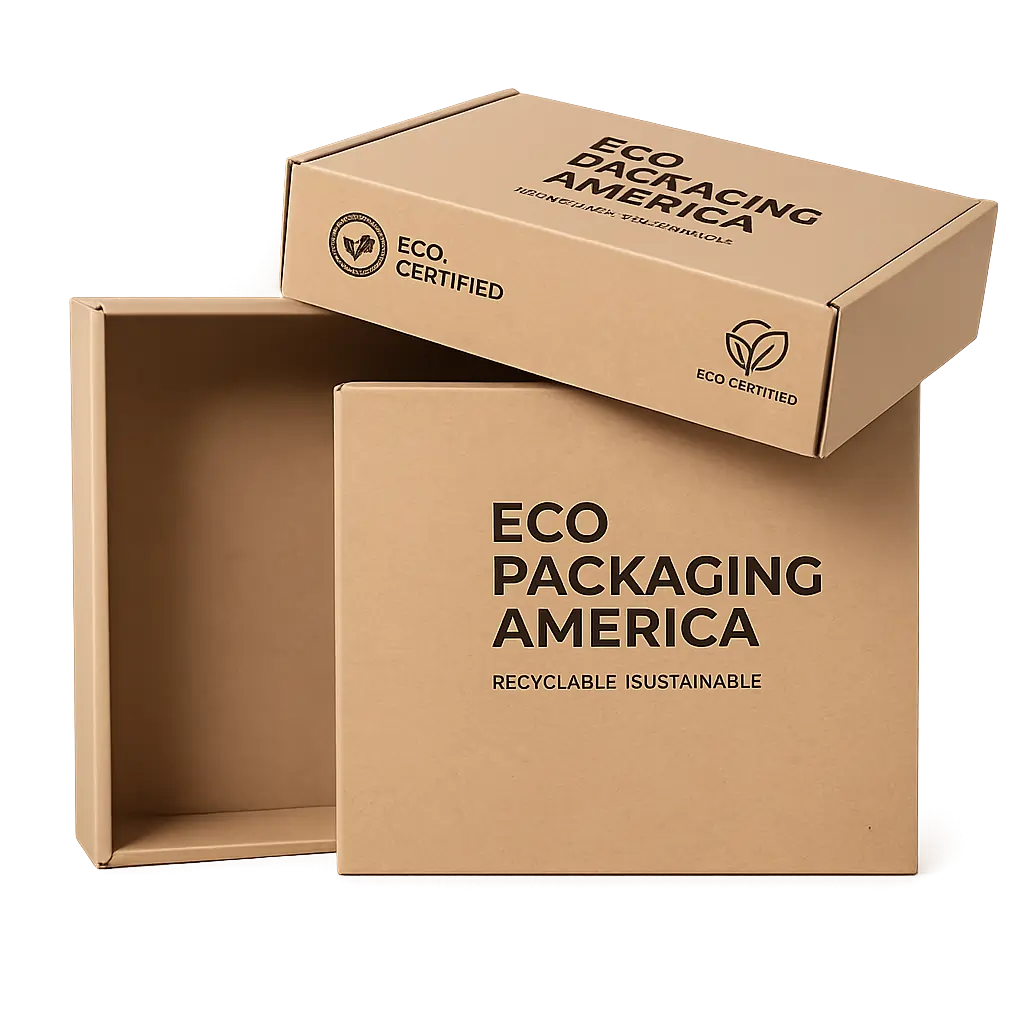
- Kraft cake boxes — simple, eco-friendly, and budget-friendly; great for an artisan look.
- Corrugated cake boxes — extra strong, best for shipping and long-distance delivery.
- Rigid cake boxes — a premium look and feel, ideal for wedding and luxury cakes.
- Window cake boxes — a clear window so the cake is visible without opening the box.
- Tiered / wedding cake boxes — built with extra support for multi-layer cakes.
| Box Type | Best For | Cost | Strength | Eco | Premium Feel |
| Kraft | Everyday cakes, artisan look | Low | Low–Med | Excellent | Medium |
| Corrugated | Shipping, long-distance delivery | Medium | High | Good | Med–High |
| Rigid | Wedding & luxury cakes | High | High | Good | Very High |
| Window | Counter display, gifting | Med | Low–Med | Good | Med–High |
| Tiered / wedding | Multi-layer cakes | Med–High | High | Good | High |
The right choice depends on the cake, the delivery distance, and the impression you want to leave.
What Size Cake Box Do You Need?
Size is where most damage starts. Too tight and you smear the frosting; too loose and the cake slides. Here’s a quick reference for the most common cake sizes:
| Cake Size | Box Size (L × W × H) |
| Small (6″ cake) | 8″ × 8″ × 4″ |
| Medium (8″ cake) | 10″ × 10″ × 5″ |
| Large (10″ cake) | 12″ × 12″ × 6″ |
| Sheet cake | 14″ × 10″ × 4″ |
| Tiered / wedding cake | 16″ × 16″ × 8″ |
For the full size chart covering donuts, cupcakes, croissants, and macarons too, see our complete bakery box size guide. When in doubt, measure the cake at its widest and tallest points, add about ¼–½ inch of clearance, and order a physical sample before a full run.
Must-Have Features in Custom Cake Boxes
A good box isn’t just about looks. These are the features that actually matter:
- Correct size and depth — too tight damages the frosting, too loose lets the cake slide.
- Sturdy base support — especially important for heavier cakes and multiple tiers.
- Ventilation holes — prevent condensation buildup that can ruin the icing.
- Secure locking tabs or handles — safer to carry, with fewer accidents during delivery.
- Food-grade, grease-resistant material — protects both the cake and the box exterior.
- High-quality custom printing — logo, brand colors, and finish (matte, gloss, or foil) for better brand recall.
Food Safety & Grease Resistance
Because the cake touches the box, food safety isn’t optional. In the US, the FDA regulates the materials that contact food — paperboard, inks, and coatings — under 21 CFR Parts 174–186. You don’t need to memorize the rules; you just need to ask your supplier the right questions:
- Are the board, inks, and coatings food-safe and compliant with 21 CFR 174–186?
- Is there a grease-resistant liner or coating for buttercream and oil-rich cakes?
- Can you provide a materials compliance declaration if a retailer or marketplace asks?
Grease resistance matters twice over: it stops oil from bleeding through and staining the printed exterior, and it keeps the box from going soft and losing structure before the cake reaches the customer.
Choosing the Right Cake Box Supplier
How reliable your packaging is depends heavily on your supplier. It also helps to know where they’re actually based and where production happens — a company registered in one country may print in another, which affects lead times and quality control. Before you place an order, check these points:
| What to Check | Why It Matters |
| Minimum Order Quantity (MOQ) | Affects cash flow, especially for small or new bakeries |
| Material quality certifications | Ensures food-safety compliance (FDA 21 CFR 174–186) |
| Custom printing capability | Determines how strong your branding will look |
| Sample availability | Lets you test durability and fit before committing |
| Lead time | Impacts your ability to restock during busy seasons |
| Pricing at different volumes | Helps you plan for scaling up later |
| Production location & communication | Affects shipping times, quality control, and support |
Buying Cake Boxes Wholesale: Benefits & Drawbacks
Many growing bakeries eventually move from small-batch orders to buying cake boxes wholesale. Here’s what to weigh before making the switch.
Benefits
- Significantly lower cost per unit
- Consistent stock and fewer supply interruptions
- Easier to negotiate custom branding at scale
Drawbacks
- Requires storage space for bulk inventory
- Higher upfront investment
- Risk of overstocking if demand estimates are off — or if you plan to redesign packaging soon
A practical middle path: prove a design with a smaller run first, then scale the winner to wholesale once you’re confident in the artwork and your volume.
Common Mistakes to Avoid
- Choosing the cheapest option without testing durability
- Ignoring ventilation, which leads to soggy or sweaty frosting
- Ordering the wrong size by guesswork instead of exact measurements
- Skipping samples and going straight to a bulk print run
- Overlooking branding — plain, unbranded boxes waste a free marketing opportunity
Expert Tips at a Glance
| Five things we tell every cake business
1. Size to the cake plus ¼–½” clearance, and set it on a non-slip, grease-resistant base board. 2. Match the box to the trip: kraft for local, corrugated for shipping, rigid for weddings. 3. Add ventilation for warm or humid conditions to stop icing from sweating. 4. Confirm food-grade, grease-resistant materials in writing (21 CFR 174–186). 5. Order a physical sample before any bulk run — screens don’t show fit or strength. |
Key Takeaways
- A cake box has two jobs: protect the cake in transit and present your brand.
- Match box type to the trip — kraft (local), corrugated (shipping), rigid (weddings), window (display).
- Right-size the box (¼–½” clearance), support the base, and add ventilation to protect the icing.
- Confirm food-grade, grease-resistant materials (FDA 21 CFR 174–186) before ordering.
- Vet suppliers on MOQ, samples, lead time, certifications, and where production happens.
- Prove a design with a small run before scaling to wholesale.
Frequently Asked Questions
What is the best material for cake boxes?
It depends on the cake and the journey. Kraft is budget-friendly and gives an eco, artisan look for everyday cakes. Corrugated is stronger and best for shipping or long-distance delivery. Rigid board delivers a premium feel for wedding and luxury cakes, and window boxes let customers see the cake without opening it. Whatever you choose, make sure it’s food-grade and, for buttercream or oil-rich cakes, grease-resistant so oil doesn’t bleed through or soften the box.
What size cake box do I need?
As a quick reference: a 6-inch cake fits an 8″ × 8″ × 4″ box, an 8-inch cake fits 10″ × 10″ × 5″, and a 10-inch cake fits 12″ × 12″ × 6″. Sheet cakes use about 14″ × 10″ × 4″, and tiered or wedding cakes need a tall, reinforced box around 16″ × 16″ × 8″. For non-standard cakes, measure the widest and tallest points, add ¼–½ inch of clearance, and order a sample before a full run.
Are cake boxes food safe?
They are when made from food-grade materials. The FDA regulates the paperboard, inks, and coatings that contact food under 21 CFR Parts 174–186. Ask your supplier to confirm the materials are food-safe and to provide a compliance declaration if needed. For buttercream and oil-rich cakes, add a grease-resistant liner or coating — it stops oil from staining the printed exterior and keeps the box from going soft before the cake reaches the customer.
Do cake boxes need ventilation holes?
For many cakes, yes. A warm cake or a humid environment creates condensation inside a sealed box, which makes the icing sweat and can turn frosting soggy. Small ventilation holes let moisture escape and keep the surface looking fresh. The exception is cold, delicate items where you want to limit airflow — so match ventilation to the product. If you’re unsure, ask your supplier what they recommend for your specific cakes and climate.
How do I keep a cake from sliding in the box during delivery?
Three things: size the box snugly (with just ¼–½ inch of clearance), set the cake on a non-slip, grease-resistant base board, and keep the box level during transport — never on a tilting seat. A non-slip mat in the vehicle helps, and for heavier or tiered cakes, a reinforced base stops the box from bowing. Together these keep the cake centered and stable so the frosting arrives intact.
What’s the best cake box for shipping long distance?
Corrugated cake boxes are the safest choice for shipping. The fluted inner layer resists crushing far better than flat paperboard, and pairing the box with a snug fit and base support keeps the cake from shifting. For fragile or tall cakes, add internal support and clear “this side up” and “fragile” markings. Keep temperature-sensitive cakes cool in transit, and test your full packing setup with a trial shipment before you rely on it for real orders.
Are custom printed cake boxes worth the cost?
For most bakeries, yes. Custom boxes usually come in sturdier material — the manufacturer’s reputation is on the print — and the logo and colors turn every delivery into free marketing. Branded, premium-feeling packaging also supports higher prices and repeat purchases. And it’s more affordable than many owners assume; you no longer need a huge order to get quality branded boxes. If your volume is very low, start with branded stickers on plain boxes and scale up later.
What is the minimum order for custom cake boxes?
Most suppliers require about 100–500 boxes per design, though it varies by box type — rigid and heavily finished boxes often sit higher. A first custom order typically takes around 2–3 weeks from approved artwork. Always request a physical sample before committing to a bulk run, and ask about pricing at different volumes so you can plan for scaling. If the minimum feels high right now, branded stickers on plain boxes are a lower-commitment starting point.
Should I buy cake boxes wholesale?
Wholesale makes sense once your volume is steady. The benefits are a much lower cost per unit, more consistent stock, and better branding terms at scale. The trade-offs are storage space, a higher upfront investment, and the risk of overstocking if demand shifts or you plan to redesign soon. A safe approach is to prove a design with a smaller run first, then scale the winning design to wholesale once you’re confident in both the artwork and your ongoing demand.
What features should a good cake box have?
Look for the right size and depth (snug but not tight), sturdy base support for heavier or tiered cakes, ventilation to prevent soggy frosting, secure locking tabs or handles for safe carrying, food-grade grease-resistant material, and high-quality printing for brand recall. Together these protect the cake and present your brand. Skimping on any one — especially size, ventilation, or material — is where most delivery problems and bad reviews start.
Final Thought
The right box does more than protect your cake — it protects your reputation, tells your brand story, and gives customers a reason to remember you. Whether you’re ordering a small batch of custom cake boxes or moving up to wholesale, the goal stays the same: keep the cake safe, and make sure the packaging speaks for your brand before the customer takes the first bite.
| Ready to get cake boxes that protect the cake and the brand?
At Eco Packaging America, we help US cake businesses choose the right box type, size, and finish — with food-grade, grease-resistant materials, low minimums, samples, and fast turnaround. Tell us your cake sizes and quantity, and we’ll send a no-pressure quote and a sample recommendation. Request your free custom cake box quote today. |
About the Author
Eco Packaging America — Packaging Team. Custom Eco-Friendly Packaging Specialists for US Markets. With over 5 years of experience producing custom eco-friendly packaging for US food brands, bakeries, and e-commerce businesses, we’ve helped 200+ American brands create packaging that sells. We specialize in sustainable kraft, rigid, and mailer box solutions with low minimum orders and fast turnaround.