Your cookies are perfect. Your cakes look amazing. And then a customer opens a plain brown box with no logo, no name, nothing — and never orders again.
Here’s the hard truth: your packaging might be quietly costing you repeat business, and you’d never see it in your sales reports. Nobody writes a review that says “the box was forgettable.” They just don’t come back.
This guide walks through everything a US bakery needs to know about custom bakery boxes — the real options, the honest trade-offs, the mistakes that cost money, and when custom packaging is genuinely worth it (and when it isn’t yet). We sell these boxes for a living, so we’ll also tell you the parts most suppliers leave out.
In This Article
- Why bakery packaging is more than just a box
- The main types of custom bakery boxes (with a comparison table)
- Kraft vs. white boxes: which fits your brand
- The real upside — and the honest downsides
- When custom packaging shouldn’t be your first move
- Packaging mistakes that quietly drain profit
- Food safety & FDA basics for bakery boxes
- Moisture, grease & shelf life
- Print finishes that signal “premium”
- Sustainability: what US buyers actually pay for
- Seasonal & occasion packaging ideas
- How to choose a supplier + cost vs. ROI
- Frequently asked questions
Why Bakery Packaging Is More Than Just a Box
Most bakery owners pour their time and money into recipes, ovens, and kitchen space. That makes sense — taste matters most. But it’s easy to forget that packaging is the first thing a customer touches, before they ever taste a single bite.
A plain white box makes even a beautiful product feel generic, especially sitting next to a polished café or a trendy dessert brand. A custom bakery box does the opposite. It gives customers that “local, handmade, made-with-care” feeling the moment they pick it up — and that feeling is doing real work on how much they think your product is worth.
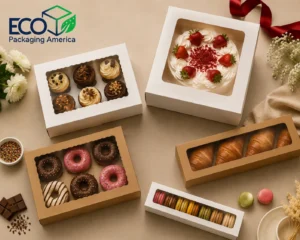
The first impression happens before the first bite
This isn’t just a nice theory. In a national survey Ipsos ran for the Paper and Packaging Board (2,002 US adults), about 72% of consumers said packaging design can sway which product they buy. For gifts — think holiday cookie boxes and wedding favors — that number climbed to roughly 81%.
The same study found two things that matter a lot for bakeries: around 63% of Americans said paper and cardboard packaging makes a product feel premium or higher quality, and about 69% said it makes a product seem more artisanal or handcrafted. If “handmade” is your whole brand, the right box is telling that story before anyone opens it.
| Expert take
Packaging is one of the cheapest brand tools you own. You already pay to make the product and ship it. A printed box adds cents per unit but changes how the whole experience feels — and feelings are what get people to reorder and recommend. |
Types of Custom Bakery Boxes (and When to Use Each)
There’s no single “best” bakery box. The right choice depends on what you’re selling, how it travels, and whether it’s an everyday order or a gift. Here are the formats we set up most often for US bakeries.
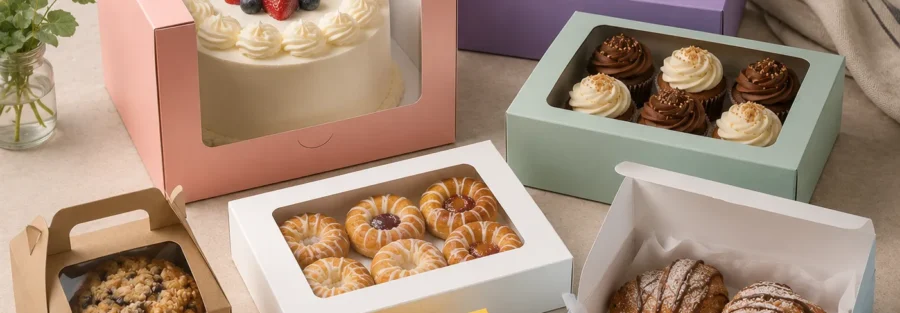
Window Boxes
A clear window lets customers see the product before they open the box, which builds trust and a little bit of excitement. Great for cookies, macarons, cupcakes, and gift sets sold at the counter or on a display shelf. Expect to pay roughly 10–20% more than a plain box for the window film and die-cut.
The catch: standard window boxes don’t love cold, damp air. Refrigerated, humid conditions can soften the paperboard and cloud or peel the film over time. Window boxes are best for short-term display and same-day pickup, not long fridge storage.
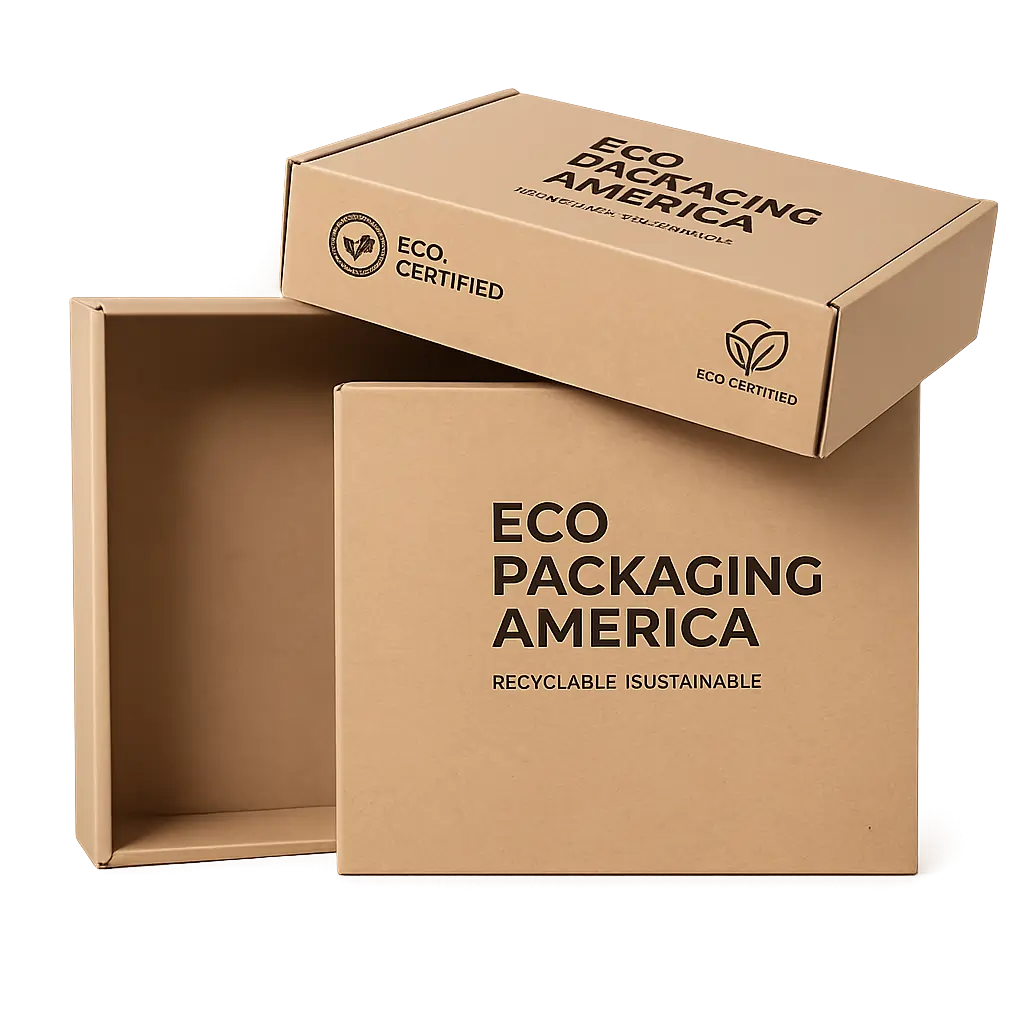
Kraft Bakery Boxes
Unbleached kraft paper gives that natural, earthy, handmade look health-conscious US buyers gravitate toward. It’s recyclable, it takes a one-color logo beautifully, and it reads “small-batch” instantly. Like most uncoated paper, though, plain kraft absorbs moisture from cold, humid air, which softens it the longer it sits in the fridge. Best for same-day and next-day use — or choose a food-grade grease/moisture-resistant liner if items are oily or refrigerated.
Rigid (Set-Up) Gift Boxes
For holidays, wedding favors, corporate gifting, or premium dessert sets, rigid boxes create a true luxury unboxing moment — thick, sturdy, often finished with a ribbon or magnetic closure. They cost more and usually ship flat-packed or pre-assembled, but customers feel like they received a gift, not just a box of cookies. That perception lets you charge a gift-level price.
Folding Cartons (Printed Paperboard)
The everyday workhorse. Folding cartons ship flat, assemble in seconds, and give you a full-color printable surface at a friendly per-unit cost once you clear the minimum. Ideal for cupcakes, slices, pastries, and cookie packs sold in volume. This is where most growing bakeries land after they outgrow stickers on plain boxes.
Corrugated Mailer Boxes (for shipping)
If you ship cakes, cookies, or subscription boxes, a flat paperboard box won’t survive the journey. Corrugated mailers add a fluted inner layer for crush resistance, and they’re what makes an at-home unboxing feel intentional. Pair them with molded or paperboard insert trays so nothing slides around in transit — more on that in the mistakes section below.
Cake & Cupcake Boxes with Inserts
Cakes and cupcakes need structure, not just a pretty exterior. Tall cake boxes with a locking base, and cupcake boxes with die-cut inserts that hold each cup in place, prevent the frosting-smear disaster that turns a five-star product into a one-star review. Inserts are cheap insurance.
| Box Type | Best Use | Relative Cost | Eco Rating | Shipping Strength | Premium Feel |
| Window box | Counter display, gift sets, cookies | Medium | Good | Low–Medium | Medium–High |
| Kraft box | Same-day pickup, artisan look | Low–Medium | Excellent | Low–Medium | Medium |
| Rigid gift box | Holidays, weddings, premium sets | High | Good | High | Very High |
| Folding carton | Everyday cupcakes, pastries, packs | Low | Good | Low–Medium | Medium |
| Corrugated mailer | Shipping cakes, subscription boxes | Medium | Good | High | Medium–High |
| Cake/cupcake + insert | Cakes, cupcakes, fragile items | Medium | Good | Medium–High | Medium–High |
Cost and ratings are general guidance; exact pricing depends on size, material, print, and order quantity.
Kraft vs. White Boxes: Which Custom Bakery Boxes Fit Your Brand?
This is the single most common question we get, so it’s worth its own breakdown. Neither is “better” — they signal different things.
| Factor | Kraft (Unbleached) | White (Bleached / Coated) |
| Brand feel | Natural, artisanal, eco, small-batch | Clean, modern, premium, colorful |
| Print colors | Best for 1–2 colors; earthy tones | Full-color photos and bright art pop |
| Eco perception | Strong — reads recyclable at a glance | Good, but looks less “green” |
| Moisture behavior | Absorbs moisture unless lined/coated | Coating adds some grease/moisture help |
| Typical cost | Often lower | Similar; coatings can add a little |
| Best for | Cookies, rustic bakes, eco brands | Cakes, colorful desserts, modern brands |
Quick rule of thumb: if your brand story is “handmade and natural,” go kraft. If it’s “polished and Instagram-bright,” go white or coated. And if your product is oily or refrigerated, add a food-grade liner or coating no matter which color you pick.
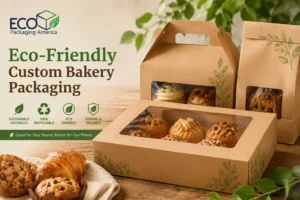
The Real Upside of Custom Bakery Boxes
- Instant brand recognition the moment a customer sees the box — before they taste anything.
- Free social marketing. People photograph packaging before they even open it. Around 40% of consumers say they’ll share a photo when packaging looks unique or gift-like (Dotcom Distribution). A plain box gives them no reason to post; a custom box turns every order into reach you didn’t pay for.
- Higher perceived value, so you can price like the premium bakery you are instead of competing on “cheapest cupcake.”
- Fewer damaged products and refunds when boxes are sized right and strong enough for the journey.
- More repeat business. A 2024 Ryder study of US online shoppers found 41% said a great unboxing made them want to buy from the brand again — rising to about 60% for shoppers under 30.
Here’s the part that’s easy to forget: everyone has a camera in their pocket now. A memorable box doesn’t just please the person who bought it — it quietly advertises to everyone who sees their post. That’s the cheapest customer acquisition you’ll ever run.
The Honest Downsides (What Some Suppliers Won’t Tell You)
We’d rather you go in clear-eyed than feel surprised later. Custom packaging has real trade-offs:
- Minimum orders. Most printers require 100–500 boxes per design. If you run several sizes, that adds up fast.
- Higher unit cost. Custom boxes typically run 30–60% more than plain, generic ones — though the per-unit price drops sharply as your quantity climbs.
- Lead time. A first order usually takes about 2–3 weeks once artwork is approved. Plan around holidays and launches.
- Design risk. A cluttered or off-brand design can confuse customers instead of attracting them. Good structure beats busy graphics.
- Wrong sizing. A box that’s too big lets products shift and arrive damaged; too small crushes them. Sizing is a quiet profit-killer.
When Custom Packaging Shouldn’t Be Your First Move
If your bakery does fewer than about 20 orders a week, full custom boxes may not be worth it yet. Before you commit to a minimum order, try the cheaper moves that get you 80% of the brand feeling:
- Custom stickers or labels on plain kraft or white boxes — same branded feel, a fraction of the cost.
- Custom tissue paper, stamps, or a printed thank-you card — inexpensive, personal, and easy to swap seasonally.
- Branded ribbon or twine for gift orders, which reads “premium” without a custom die.
| Our honest advice
We’d genuinely rather see you succeed with simple stickers today than overspend on 500 custom boxes before your volume justifies it. Save full custom packaging for when your order count clears the minimum comfortably — and grow into it. |
Packaging Mistakes That Quietly Drain Profit
These are the ones we see over and over. Each is fixable, and each is costing bakeries money right now.
1. Guessing the box size
An oversized box lets a cake slide and smear; an undersized one crushes it. Both create refunds and bad reviews. Measure your product with its final presentation (liner, wrapper, insert) and size the box to hold it snugly. When in doubt, ask your supplier for a physical sample before the full run.
2. Ignoring grease and moisture
Buttery pastries and refrigerated cakes need a moisture or grease barrier. Skip it and the box goes soft, stains, or falls apart — right in front of the customer. Grease-resistant liners or food-grade coatings solve this for pennies per unit.
3. Not confirming food-grade materials
Not every printed box is safe for direct food contact. If bare product touches the box, the paperboard, inks, and coatings all need to be food-safe. Never assume — ask (details in the next section).
4. No reorder path on the box
A box is prime real estate. A tiny QR code or “reorder at…” line turns a one-time gift recipient into a repeat customer. Most bakeries leave this space blank.
5. Over-ordering before product-market fit
Committing to 1,000 boxes of a design you’ll want to change in three months is a common, painful mistake. Start at the minimum, learn, then scale the winner.
6. Cheap print that scuffs in transit
Uncoated dark ink can scuff and look tired by the time a shipped box arrives. A matte or gloss coating protects the print and keeps it looking fresh on the doorstep.
Food Safety & FDA Basics for Bakery Boxes
You don’t need to become a regulatory expert, but you should know enough to ask the right questions. In the US, the FDA regulates the materials that touch food rather than approving each finished box. Paperboard, corrugated board, inks, coatings, and adhesives that may contact food are treated as “food contact substances” and must be authorized for that use — the relevant rules live in 21 CFR Parts 174–186.
In plain terms: the cardboard, inks, and coatings in a food box should come from FDA-compliant sources. Before you order, confirm this with your supplier:
- Are the paperboard and corrugated materials compliant with 21 CFR 174–186 for food contact?
- Are the inks and coatings food-safe and approved for indirect food contact?
- Do you offer uncoated food-grade kraft or a food-grade liner where product touches the box directly?
- Can you provide a materials compliance declaration if a retailer or marketplace asks for one?
A reputable US packaging partner will have clear answers and documentation ready. If a supplier can’t confirm any of this, treat it as a red flag. (You can read the FDA’s own overview on food packaging and food contact substances for the source detail.)
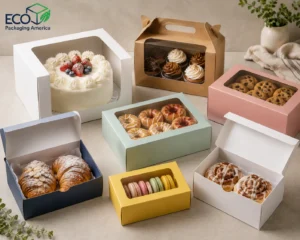
Moisture, Grease & Shelf Life
Material choice quietly decides how your product looks and holds up hours after it leaves your kitchen. A few practical rules:
- Same-day, dry items (cookies, biscotti): uncoated kraft or paperboard is fine and looks great.
- Oily or buttery items: add a grease-resistant liner or coating so oil doesn’t bleed through.
- Refrigerated cakes and cream products: choose coated board or a food-grade liner; avoid plain window boxes for long fridge storage, since humidity softens them.
- Shipped items: corrugated plus an insert, and keep any window small — large film panels are the first thing to fail in transit.
Matching material to storage conditions is the difference between a box that still looks fresh at delivery and one that arrives soft, stained, and apologetic.
Print Finishes That Signal “Premium”
You don’t need every finish — you need the right one for your brand. Here’s what each one actually communicates:
- Matte lamination: modern, understated, scuff-resistant. A safe premium default.
- Gloss lamination: vivid and bright; makes colorful desserts pop.
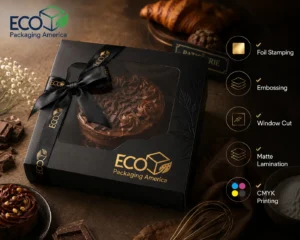
- Soft-touch coating: that velvety, luxury feel — expensive-looking, and people notice it in hand.
- Foil stamping: gold or silver logo shine for gift and wedding lines.
- Spot UV: gloss highlight on a matte box — subtle, tactile, and photographs well.
- Embossing/debossing: a raised or pressed logo that reads “craftsmanship” without any ink at all.
- Kraft + one-color: the most cost-effective way to look artisanal on a budget.
Structure sells too. A ribbon, a magnetic-close lid, tissue paper, or a printed insert can lift a box from “nice” to “gift” — and lift your price with it.
Sustainability: What US Buyers Actually Pay For
Eco-friendly packaging isn’t a fringe preference anymore — it’s a buying filter, especially for younger shoppers. And it’s not just goodwill: according to Two Sides research, about 41% of US consumers say they’d pay more for a product packaged in sustainable materials.
The market backs that up. The US sustainable packaging market was valued near $49 billion in 2024 and is projected to reach roughly $74 billion by 2034 — around a 50% jump over the decade (Towards Packaging). Paper and fiber-based formats lead that growth, which is good news for bakeries: your natural materials are exactly what buyers want.
To make eco claims that hold up rather than sound like greenwashing:
- Use recyclable kraft or paperboard and say so plainly on the box.
- Look for FSC-certified paper if responsible sourcing is part of your story.
- Offer compostable options for markets and events where that matters.
- Choose soy or water-based inks where available, and skip plastic windows when you can.
- Be specific, not vague. “100% recyclable kraft” beats a fuzzy “eco-friendly” badge every time.
Seasonal & Occasion Packaging Ideas
A little seasonal variation gives customers a reason to buy again and again. You don’t need a new box each time — often a swap of sticker, sleeve, or ribbon does it:
- Holidays: red-and-green sleeves, foil snowflakes, or a limited-run rigid gift box for December.
- Valentine’s Day: heart die-cut windows and pink kraft for cookie and macaron sets.
- Weddings & showers: elegant favor boxes with foil monograms and ribbon.
- Corporate gifting: clean, co-brandable boxes with room for a client’s logo or a thank-you card.
- Fall/seasonal launches: warm-tone sleeves over your standard kraft box — cheap, fast, festive.
How to Choose a Supplier — and Whether It Pays Off
What to look for in a bakery packaging supplier
- Low, realistic minimums (100–500 boxes) so you can start without a huge commitment.
- Proof of food-grade materials and a compliance declaration on request.
- An experienced dieline team that understands bleed, fold, and print tolerances for food boxes.
- Physical samples before your full run — never approve a food box from a screen alone.
- Clear turnaround times and honest lead times around holidays.
Cost vs. ROI: is custom packaging worth it?
The math is simpler than it feels. Suppose a custom box adds a modest amount per order over a plain box. If that better box nudges even a small share of first-time buyers into a second purchase — and the repeat-purchase research above says it can — the lifetime value of those returning customers usually dwarfs the extra packaging cost.
Run your own numbers: take your average order value, your current repeat rate, and estimate how many more customers would reorder if the unboxing actually felt special. For most bakeries with steady volume, packaging pays for itself through repeat orders and free social sharing long before it shows up as a cost problem. The exception is very low volume — which is exactly why we recommend the sticker-first path until you’re ready.
Expert Tips at a Glance
| Five things we tell every bakery client
1. Match the material to storage: same-day dry goods can go uncoated; oily or refrigerated items need a liner or coating. 2. Order a physical sample before any full run. Screens lie about size and color. 3. Put a reorder QR code or handle on the box — turn one gift into a repeat customer. 4. Start at the minimum, test, then scale the winning design. Don’t over-commit early. 5. Confirm food-grade materials in writing. Ask for the compliance declaration. |
Key Takeaways
- Packaging is the first thing customers touch — and roughly 72% say design influences what they buy (Ipsos / Paper and Packaging Board).
- Kraft reads artisanal and eco; white and coated read polished and colorful. Match the box to your brand story.
- Custom boxes cost 30–60% more than plain ones and need a 100–500 minimum, but per-unit cost drops fast with volume.
- Below ~20 orders a week, start with stickers, sleeves, and tissue — not full custom boxes.
- Confirm food-grade materials (21 CFR 174–186) and add a moisture or grease barrier where needed.
- About 41% of US consumers will pay more for sustainable packaging — your natural kraft is an asset, not a compromise.
Frequently Asked Questions
What are custom bakery boxes?
Custom bakery boxes are printed packaging made specifically for baked goods — cookies, cakes, cupcakes, pastries, and desserts — with your brand’s logo, colors, size, and structure. They come in formats like kraft boxes, window boxes, folding cartons, rigid gift boxes, and corrugated mailers for shipping. Unlike generic boxes, they’re built around your product’s exact dimensions and food-safety needs, so items travel well and your brand shows up the moment a customer picks up the box.
How much do custom bakery boxes cost?
Pricing depends on size, material, print, finishes, and quantity. Custom boxes usually run about 30–60% more than plain generic ones, but the per-unit price drops sharply as your order grows — a box that’s pricey at 100 units can be very affordable at 1,000. Setup, dielines, and special finishes like foil add cost. The best way to know your number is to request a quote with your box size, material, and target quantity.
What is the minimum order for custom bakery boxes?
Most printers require a minimum of about 100 to 500 boxes per design. Simpler formats and standard sizes tend to have lower minimums; rigid or heavily finished boxes may sit higher. If you run several sizes, each design usually carries its own minimum. If those numbers feel too high for now, branded stickers on plain boxes give you a similar look at a fraction of the commitment until your volume grows.
Are kraft bakery boxes food safe?
Food-grade kraft made for food contact is safe, but not every kraft box qualifies automatically. The paperboard, inks, and any coatings need to be authorized for food contact under FDA rules (21 CFR 174–186). Ask your supplier to confirm the materials are food-safe and to provide a compliance declaration if needed. For oily or refrigerated items, add a grease-resistant liner or coating, since bare kraft absorbs moisture and can soften or stain.
Kraft vs. white bakery boxes — which is better?
Neither is universally better; they signal different brands. Kraft looks natural, artisanal, and eco-friendly, and it’s ideal for one or two-color logos and rustic products like cookies. White or coated boxes look clean and modern and make full-color art and bright desserts pop. Choose kraft if your story is “handmade and natural,” and white if it’s “polished and colorful.” Whatever you pick, add a food-grade liner or coating for oily or refrigerated products.
Do custom bakery boxes work for shipping?
Yes, but flat paperboard boxes alone won’t survive shipping. For cakes, cookies, or subscription orders, use corrugated mailer boxes, which have a fluted inner layer for crush resistance, and pair them with insert trays so products don’t slide around. The right shipping setup prevents damage, refunds, and bad reviews — and a well-designed mailer creates the at-home unboxing moment that customers love to photograph and share on social media.
Are window bakery boxes good for refrigerated products?
For short-term display and same-day pickup, yes — the window builds trust by letting customers see the product. For long refrigerated storage, standard window boxes are a weaker choice. Cold, humid air can soften the paperboard and cloud or peel the window film over time. If you need a window on a refrigerated item, keep the panel small, use a coated or lined board, and don’t rely on it for extended fridge storage.
What’s the best eco-friendly bakery packaging?
The strongest options are recyclable kraft and paperboard, ideally FSC-certified, with compostable choices for markets and events. Buyers respond to it: around 41% of US consumers say they’ll pay more for sustainable packaging (Two Sides). To keep claims credible, be specific — “100% recyclable kraft” beats a vague “eco” label — use soy or water-based inks where possible, and minimize plastic windows. For most bakeries, natural kraft already looks and performs like the eco choice customers want.
How long does custom bakery packaging take?
A first custom order typically takes about 2–3 weeks from approved artwork to delivery, sometimes longer for rigid boxes or special finishes like foil. Reorders of an existing design are usually faster since the dieline and print files already exist. Always build in extra time before holidays and product launches, when both demand and lead times rise. If you’re on a tight deadline, ask your supplier about rush options and realistic turnaround before you commit.
Is custom packaging worth it for a small or home bakery?
It can be, but timing matters. If you’re doing fewer than about 20 orders a week, full custom boxes may not pay off yet. Start with branded stickers, custom tissue, stamps, or ribbon on plain boxes — you get most of the brand feel at a fraction of the cost and commitment. As your volume grows past the minimum order comfortably, graduate to custom folding cartons or mailers. Grow into packaging; don’t overspend ahead of demand.
The Bottom Line on Custom Bakery Boxes
Your product is already good — that’s the hard part, and you’ve done it. Packaging is the cheap, high-leverage layer on top that decides whether a first-time buyer becomes a regular, and whether their friends ever hear about you.
The right custom bakery boxes make your product feel worth more, protect it on the way to the customer, and turn every order into a small piece of marketing. The wrong ones — or no branding at all — quietly cost you repeat business you never see. Start where your volume makes sense, match the material to how your product travels and stores, confirm your box is food-safe, and let the box do some of the selling for you.
| Ready to see what your boxes could look like?
At Eco Packaging America, we help US bakeries choose the right format, keep minimums low, and get food-grade, eco-friendly boxes that actually fit your product and your budget. Tell us your product, box size, and quantity, and we’ll send a no-pressure quote and a sample recommendation. Request your free custom bakery box quote today — and let your packaging start earning its keep. |