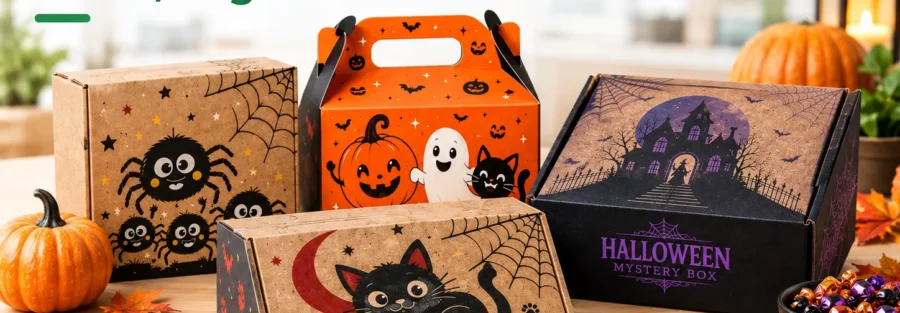
Halloween candy packaging isn’t just a box or a bag. It’s the first thing a customer touches, and it decides whether candy arrives safe, fresh, and worth photographing.
This season the stakes are higher than usual. US Halloween spending is projected to reach a record $13.5 billion in 2026, up from $13.1 billion last year, with consumers spending an average of $115.14 each and 74% planning to celebrate. Candy remains the most popular purchase in the category. That’s a lot of candy — and every piece of it needs packaging that’s safe, sturdy, and sells.
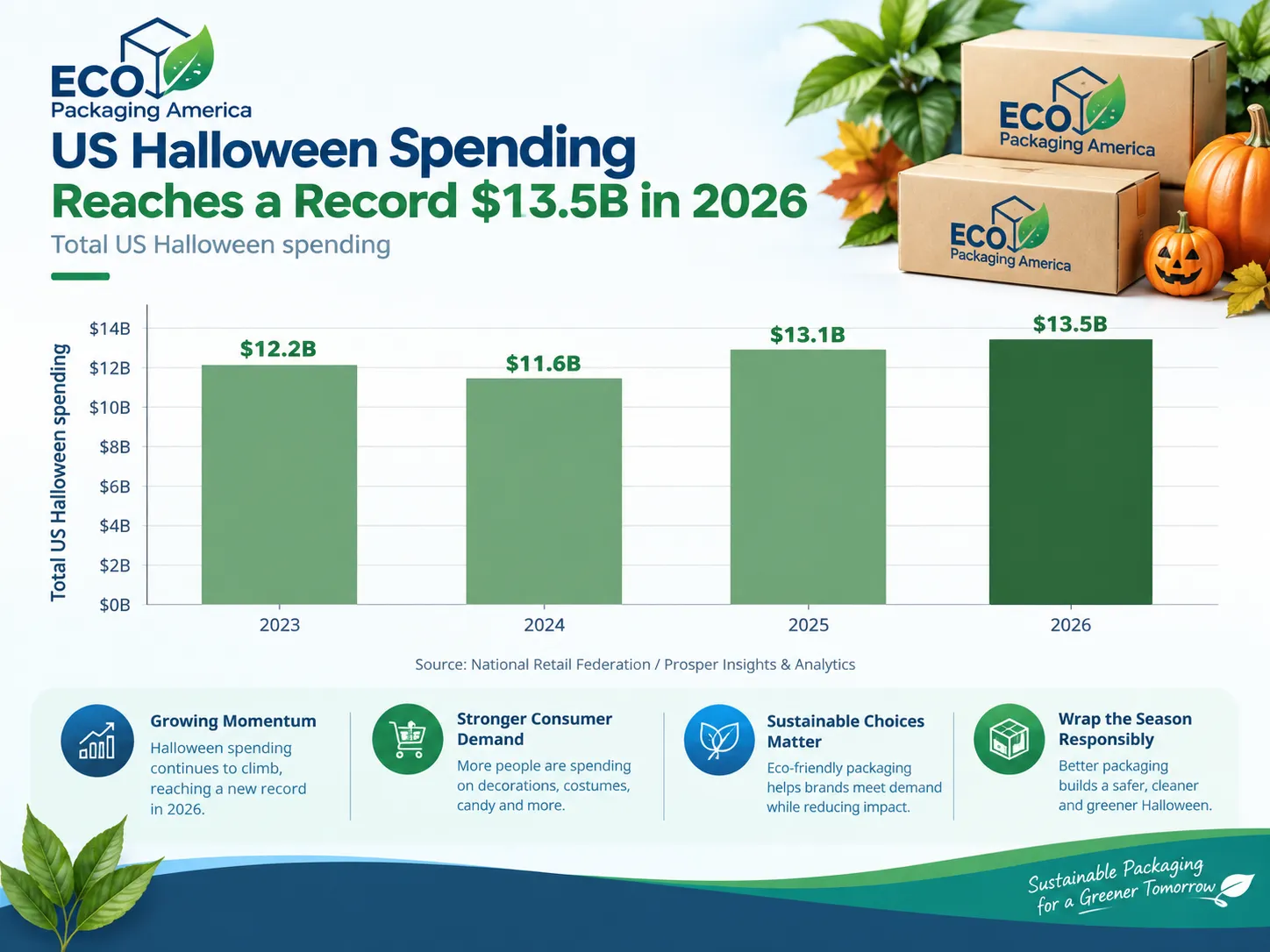
Chart 1: US Halloween spending has climbed to a record $13.5 billion for 2026. Source: National Retail Federation / Prosper Insights & Analytics.
If you run a candy brand, a bakery, or a retail range, this guide covers when a box beats a bag, what food-contact safety actually requires, and the one safety issue most brands assume doesn’t apply to them.
Quick Answer
Use boxes for fragile, portioned, or gift-style candy where protection and presentation matter. Use bags for loose candy, bulk mixes, and lightweight shipping. Whichever you choose, anything holding food needs FDA-compliant food-contact material and low-migration inks — and that second requirement surprises people, because ink can reach food through the board without ever touching it.
Why Packaging Matters More Than Brands Expect
Candy is the product, but packaging does three jobs at once: it keeps the product clean and fresh, it stops it breaking or melting, and it makes someone pick it up off a shelf crowded with competitors.
Timing matters too. Halloween shopping starts early — a quarter of consumers had already bought at least one Halloween item by early August, with candy among the most-purchased items. That means packaging needs to be in hand weeks before 31 October, not days before.
Boxes or Bags: Which Fits Your Candy?
Neither is automatically better. The right answer comes from the candy’s shape, fragility, and how the customer will use it.
Boxes work best for:
- Gift sets and bundled assortments
- Fragile items — chocolate shapes, truffles, filled chocolates
- Products where shelf branding is doing the selling
- Anything that needs inserts to hold pieces in place
Bags work best for:
- Loose candy — gummies, mini chocolates, hard candy
- Bulk trick-or-treat packs where weight and cost matter
- Products kids open themselves, where easy-tear helps
- Anything eaten over several days, where resealing matters
| Boxes | Bags | |
| Protection | Strong — resists crushing | Limited for delicate items |
| Presentation | Premium, shelf-ready, giftable | Functional, less gift-appropriate |
| Portioning | Inserts hold pieces individually | No internal structure |
| Shipping cost | Higher — more weight and volume | Lower |
| Storage | Takes more space | Compact |
| Resealing | Not usually resealable | Resealable options available |
Many brands now combine the two: a printed outer box holding individually wrapped bags or pouches inside. The inner pack handles food contact and freshness; the outer box handles protection and branding. It costs more than either alone, but for premium assortments it solves both problems properly.
Food Safety: What Actually Applies
Food safety is law, not a preference. In the US, the FDA regulates what may contact food, covering plastics, paper, coatings, inks, and adhesives. Halloween graphics don’t earn an exemption.
The requirements that matter
- FDA-compliant food-contact materials. Anything touching the candy must be approved for that use — this sits under 21 CFR parts 174–186. It covers food-grade plastics such as polyethylene and polypropylene as well as approved papers and coatings.
- Migration control. Packaging must not transfer harmful substances into the candy. This is the requirement most often misunderstood, and it’s covered properly below.
- Food-safe inks, dyes, and adhesives — not just the inner bag, but the printing on the outer box too.
- Grease and moisture resistance where the product needs it, using PFAS-free coatings rather than fluorinated treatments that several states now restrict.
- Good Manufacturing Practices in the facilities producing the packaging, to prevent contamination during production.
- Care with recycled content in direct contact. Recycled fibre is excellent material, but stock intended for direct food contact needs to be suitable for it specifically, not merely recycled.
If a supplier can’t explain their food-contact compliance in plain language, treat that as a warning sign. Ask for documentation before committing to a bulk order.
The part most brands get wrong
There’s a widespread belief that printing on the outside of a box can’t affect the candy inside, because it never touches it. That isn’t correct, and it’s worth understanding properly.
Ink can reach food three ways without direct contact: by set-off, where printed surfaces press against unprinted ones in a stack; by diffusion through porous board; and by evaporating into the air inside the pack. Mineral oil components in conventional printing inks are volatile enough to evaporate from printed cardboard and migrate into the product.
This is exactly why low-migration inks exist. They’re formulated from larger molecular structures, avoid mineral oils, and are fully cured so pigments stay bound to the surface. The European printing ink industry’s own guidance recommends that only mineral-oil-free inks optimised for migration be used on food packaging.
The practical takeaway: when you specify packaging, ask about the ink as well as the board. “Food-grade board” and “food-safe printing” are two separate specifications — and heavy Halloween artwork, with dense blacks and full-coverage orange, puts more ink on the board than a typical design.
Recycled board and direct contact
Worth knowing if sustainability is part of your brand. Because paper and board are recycled without separating food-contact stock from other printed material, mineral oils from non-food printing can end up in the recycled bulk even when they were never used on food packaging.
This doesn’t make recycled board unusable — it makes it better suited to the outer box than to the surface touching your candy. A sensible structure is recycled or kraft board outside, with a food-grade liner or inner bag in direct contact.
Allergens
Allergen control is mainly a question for your production facility rather than your packaging supplier. Where packaging matters is in providing enough legible space for allergen declarations, and in seal integrity that prevents contamination in storage and transit. If you produce nut-free or allergen-conscious lines, raise it early so labelling is designed in rather than squeezed on afterwards.
Material Options Compared
| Material | Pros | Cons |
| Cardboard / paperboard boxes | Strong, excellent for branding, widely recycled, protects fragile candy | Costs more than bags, takes more storage space |
| Kraft paper bags | Natural look, recyclable, suits gift-style candy | Less moisture protection than coated or film options |
| Plastic film bags | Cheap, lightweight, good barrier, efficient for bulk | Very low recycling rates, limited eco credentials |
| Compostable film pouches | Modern look, good freshness protection | Higher cost; requires the right composting infrastructure to actually break down |
| Rigid boxes | Premium feel, best protection, strongest gift presentation | Highest cost, heaviest, longest to produce |
On recyclability, the gap between paper and plastic is substantial and worth knowing when you choose.
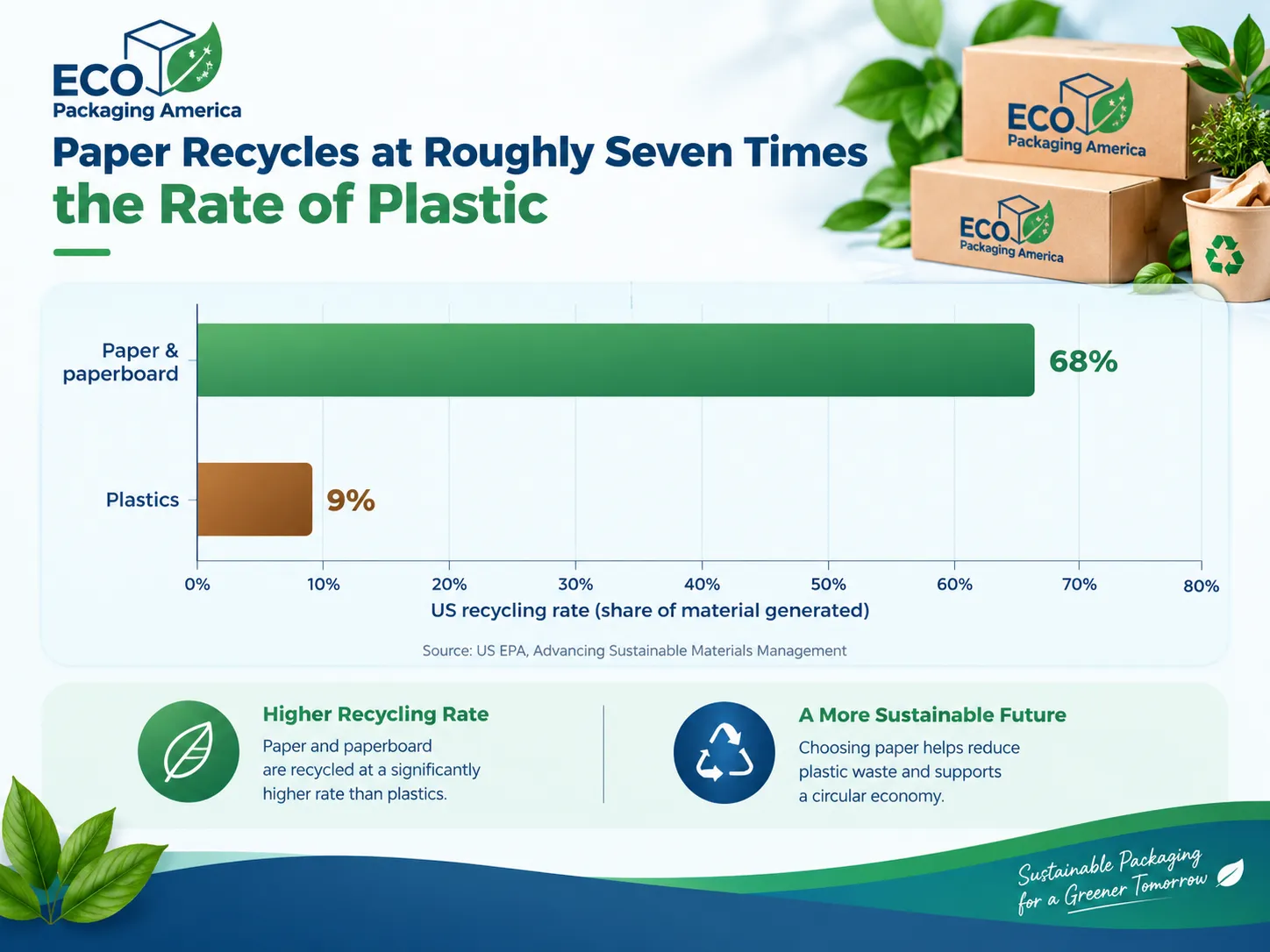
Chart 2: Paper and paperboard recycle at roughly seven times the rate of plastics in the US. Source: US EPA, Advancing Sustainable Materials Management.
One honest caveat on compostable films: compostable is not the same as recyclable, and most compostable films need industrial composting facilities to break down properly rather than a home compost heap or a curbside bin. If you use them, label them accurately — “compostable in industrial facilities where available” is defensible, “eco-friendly” on its own is not.
Matching the Format to the Product
| Candy type | Suggested format | Why |
| Truffles, bonbons, filled chocolates | Rigid or two-piece box with insert | Fragile, needs cavity support and premium presentation |
| Chocolate bars and shapes | Tuck box or sleeve | Flat, stackable, wraps easily |
| Gummies and jellies | Stand-up pouch or bag | Loose, heavy by volume, benefits from reseal |
| Hard candy, mixed sweets | Bag or treat bag | Robust, high volume, low unit value |
| Caramels, toffee, fudge | Tuck box with liner, or grease-resistant bag | Greasy; needs a coated or lined surface |
| Trick-or-treat handouts | Treat bag or gable box | Given out individually; carry matters |
| Gift and corporate assortments | Rigid, magnetic, or sleeve and tray | Presentation is the product |
Halloween-Specific Considerations
- Dark artwork means heavy ink coverage, which raises the importance of the ink specification and makes matte lamination more practical than gloss — gloss shows every fingerprint on black.
- Short selling window, long storage. Seasonal stock is often produced well ahead and stored. Seal integrity and moisture protection matter more than for fast-turning product.
- Warm October shipping. Chocolate stays temperature-sensitive into autumn across much of the US. Plan for it rather than assuming the season has cooled.
- Tamper-evidence reassures parents. For trick-or-treat handouts, sealed individual portions carry a trust signal that open bulk packaging doesn’t.
How to Choose: Three Questions
- Is my candy fragile or loose? Fragile points to a box with inserts; loose points to a bag or pouch.
- Do I want a premium gift look or a fun bulk-pack look? Gift means rigid, two-piece, or sleeve and tray. Bulk means bags and treat bags.
- Does my customer care about recyclability? If yes, lead with paper-based options and label claims accurately.
Answer those three and the format usually chooses itself. What’s left is the specification — material, ink, coating, and finish — which is where a supplier should be guiding you.
How to Specify Food-Safe Halloween Packaging
Include these when you request a quote, so safety is designed in rather than checked afterwards:
- What the candy is — chocolate, gummy, hard candy, baked — and whether it’s greasy or moisture-sensitive
- Whether packaging touches the candy directly, or whether a wrapper or inner bag sits between
- Shelf life and storage conditions, including whether stock will sit before the season
- Whether you need grease resistance, so PFAS-free coating is specified from the start
- Allergen declarations that need space on the pack
- Your artwork’s ink coverage, if it’s a heavy dark design
Then ask for documentation on both the food-contact material and the inks. A supplier who produces it quickly is telling you something useful about how they operate.
Packing candy this Halloween? Tell us what you’re packing and how it ships, and we’ll recommend a food-safe structure — boxes, bags, or both — with FDA food-grade, PFAS-free materials and a free 3D mockup before anything prints. Request a quote.
Frequently Asked Questions
What is the best packaging for Halloween candy? Boxes suit gift sets, bundled assortments, and fragile items like truffles and chocolate shapes, because they resist crushing and support inserts that hold pieces in place. Bags suit loose or bulk candy such as gummies and mini chocolates, where lighter weight lowers shipping cost. Many brands combine both: a printed outer box holding sealed inner pouches. The right answer comes from how fragile your candy is and whether presentation or volume matters more.
Are plastic bags safe for Halloween candy? Yes, provided they’re made from food-grade material approved for food contact — polyethylene and polypropylene are common examples — and any printing uses inks suitable for food packaging. The safety question is about the specification, not the format. Worth weighing separately: plastic film has a very low recycling rate in the US, so if recyclability matters to your brand, paper-based alternatives perform considerably better while meeting the same safety requirements.
What does FDA food contact packaging mean? It means the material is approved to contact food without transferring harmful substances into it. In the US these requirements sit under FDA regulations at 21 CFR parts 174–186, and they cover plastics, papers, coatings, adhesives, and inks. The approval is specific to the use: a material suitable for dry candy may not be suitable for greasy or high-moisture products. Ask your supplier to confirm the approval covers your particular application.
Is cardboard candy packaging recyclable? Plain cardboard and kraft board are widely accepted in US curbside recycling, and paper and paperboard recycle at roughly 68% nationally compared with around 9% for plastics. Certain finishes complicate this: heavy lamination, foil, and some coatings can affect acceptance. If recyclability is a claim you want to make on the pack, confirm the full specification supports it rather than assuming the base material settles the question.
What is compostable candy packaging? It’s packaging designed to break down into organic matter under composting conditions, often used for eco-oriented treat bags and pouches. The important qualifier is that most compostable films require industrial composting facilities rather than home compost heaps, and access to those facilities varies widely by area. Compostable is also not the same as recyclable — putting compostable film in a recycling bin causes problems. If you use it, label the conditions accurately.
Can small bakeries order custom Halloween candy boxes? Yes. Smaller runs are possible, though the per-unit price is higher because fixed setup costs spread across fewer boxes. For a small producer the practical approach is to put custom packaging behind one hero product rather than across a whole range, which keeps the order size manageable while still producing something that looks properly made. Ask about the minimum for your specific box style, since it varies by structure.
Why does eco-friendly packaging matter for Halloween candy? Seasonal packaging has a genuine sustainability problem: it’s designed to be relevant for a few weeks and then discarded, which concentrates a lot of material into a short window. Paper-based options recycle at far higher rates than plastic film, and right-sizing the pack cuts material use while protecting better than an oversized box. The most credible approach is specific, honest labelling rather than broad eco claims that invite challenge.
What ink is safe to print on candy packaging? Inks formulated for food packaging — often described as low-migration inks — which avoid mineral oils, use larger molecular structures, and are fully cured so pigments stay bound to the surface. This matters even when printing sits on the outside of the pack, because ink can migrate through board or evaporate into the air inside. For heavy dark Halloween artwork, specify the ink explicitly rather than assuming food-grade board covers it.
How early should I order Halloween candy packaging? Earlier than most brands expect. Production takes time after artwork is approved, and proofing and design add more before that. Since a quarter of consumers have already bought Halloween items by early August, stock needs to be in hand well before October rather than close to the 31st. Working backwards from when you need product on shelves — not from Halloween itself — is the calculation that matters.
Do individually wrapped candies need outer packaging? Usually yes. An outer box or bag protects wrapped pieces from crushing, keeps an assortment together, and provides the branding surface that sells the product on a shelf. It also gives you space for allergen declarations and product information that individual wrappers can’t carry. For trick-or-treat handouts specifically, the outer pack is often what a parent looks at when deciding whether the product is trustworthy.
What packaging keeps chocolate from melting? No packaging stops chocolate melting on its own — it slows the process and protects the product from handling. Sturdy boxes with insulating liners help, and for shipping in warm conditions, insulated liners with cold packs are the practical answer. October is still warm across much of the US, so if you ship nationally, plan for temperature rather than assuming the season has cooled. Set honest expectations with customers about transit times.
Do Halloween packaging standards differ from year-round standards? No. Food-contact requirements don’t relax for seasonal products, and a Halloween box holding chocolate is held to the same standard as everyday packaging. What changes is the risk profile: seasonal artwork uses heavier ink coverage, seasonal stock is often produced early and stored longer, and October shipping can still be warm. Same rules, slightly more demanding conditions to design around.
Final Thoughts
Halloween candy packaging is more than a box or a bag. It protects the product, it has to satisfy food safety law, and it carries the brand at the exact moment a customer decides whether to pick it up.
The format decision is a product question: fragile and portioned candy belongs in a box, loose and bulk candy belongs in a bag, and plenty of ranges are best served by both. The safety decision sits underneath either choice, and the part worth remembering is that it involves two specifications rather than one — the board has to be approved for food contact, and the ink has to be suitable for food packaging. Get both right, and the festive design on the outside is purely upside.
About the Author
Eco Packaging America — Packaging Team. Custom Eco-Friendly Packaging Specialists for US Markets. We produce custom packaging for US food brands, bakeries, confectioners, candle makers, and e-commerce businesses, specialising in sustainable kraft, rigid, and mailer box solutions with free design support and fast turnaround.