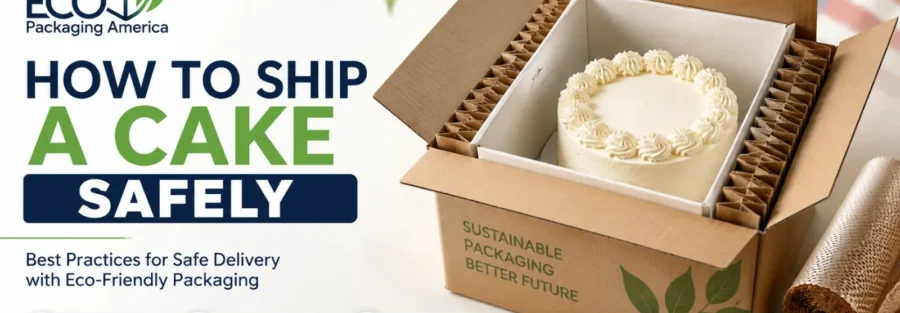
Shipping a cake isn’t as simple as it looks. A cake is soft and delicate — even a small bump in transit can ruin the frosting, shift the layers, or crack a decoration. That’s why so many people search for how to ship a cake safely: one wrong box, and the whole cake can arrive broken.
A cake is also a perishable food, made with butter, cream, fresh fruit, cream cheese, and other dairy ingredients that spoil if they sit in the heat too long. And it’s temperature-sensitive — buttercream and chocolate can melt, fondant can lose its shape, and humidity affects taste and texture. This is why good packing and fast delivery matter so much when you ship a cake long distance.
Shipping a cake safely comes down to a few key things working together: a strong corrugated cake box, protective inserts, cushioning material, cooling, and a sturdy outer box. One important thing to remember — packaging doesn’t make a cake cold by itself. Its job is to protect the cake and hold in the cold you start with. How long a cake stays fresh depends on the packaging, the ice packs, and the outside temperature.
In This Guide
- What you’ll need
- The right temperature for shipping a cake
- How to pack a cake, step by step
- Choosing the right box (corrugated)
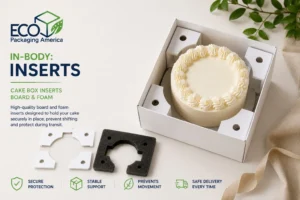
- Cake box inserts
- Keeping a cake cool
- Weather & your location
- Shipping method & carrier
- Do’s and don’ts
- Frequently asked questions
What You’ll Need
Gather everything before you start packing — a cake sitting out while you hunt for tape is a cake losing its chill:
- A corrugated cake shipping box (single-wall for light cakes, double-wall for heavy or tiered)
- A sturdy cake board or base
- Inserts — corrugated or foam, plus corner supports
- A non-slip mat
- Cushioning material (paper, molded pulp, or foam)
- Gel ice packs (for dairy, cream, or chocolate cakes)
- An insulated liner or thermal box (for hot weather or long distance)
- Strong packing tape and “Fragile / This Side Up / Keep Refrigerated” labels
The Right Temperature for Shipping a Cake
| Cake Type | Best Temperature | ||
| Buttercream cakes | 35°F – 46°F (2°C – 8°C) | ||
| Fresh cream or dairy-filled cakes | 35°F – 39°F (2°C – 4°C) | ||
| Fondant cakes (no dairy filling) | 64°F – 72°F (18°C – 22°C), cool room | ||
| Outdoor temperature above 86°F (30°C) | Insulated box + cold packs required | ||
| Keep it out of the food-safety “danger zone”
The USDA/FDA danger zone for perishable food is 40°F to 140°F (4°C to 60°C) — bacteria multiply fastest in that range, and perishable food shouldn’t sit in it for more than 2 hours (1 hour if it’s above 90°F). For dairy, cream, and cream-cheese cakes, that’s exactly why cold packs and fast shipping matter: you’re keeping the cake below 40°F for as much of the trip as possible. |
|||
How to Pack a Cake, Step by Step
Once you have your materials, packing follows a simple sequence:
- Chill the cake first. Refrigerate dairy, buttercream, cream, or fruit cakes until cold and fully set, so the frosting and decorations are firm before packing.
- Secure it to a cake board. Fix the cake to a sturdy board so the base can’t bend or shift during handling.
- Place it in the cake box on a non-slip mat. Set the board on a non-slip mat inside a corrugated cake box sized just slightly larger than the cake.
- Add inserts and corner supports. Use corrugated or foam inserts and corner supports to center the cake and stop it moving.
- Add cooling if needed. For perishable cakes, add gel ice packs and an insulated liner — kept separate from direct frosting contact.
- Cushion the gaps. Fill any empty space with cushioning so nothing can slide, then close the inner box.
- Pack inside a sturdy outer box. Place the cake box inside a strong outer shipping box, cushioned on all sides.
- Seal and label. Seal every flap with strong tape and add “Fragile,” “This Side Up,” and “Keep Refrigerated” labels.
Choosing the Right Box: Corrugated Cake Boxes
The box is the single most important part of shipping a cake. Most US bakeries — from small-town shops to big-city bakeries in Chicago and San Francisco — trust corrugated cake shipping boxes because they’re strong, light, and reliable.
Single-wall vs. double-wall
A single-wall box is fine for light, small cakes. A double-wall box is the better choice for heavy or multi-tier wedding cakes, since it adds extra strength and crush resistance.
Choose the right size
The best cake shipping box is a little bigger than the cake — enough room for cushioning around it, but not so much that the cake can slide.
Strong bottom and flaps
A sturdy bottom and secure flaps stop the box from opening and keep the cake from shifting in transit.
Grease and moisture resistance
A grease- and moisture-resistant coating protects the box from oil, cream, and dampness, keeping it strong for the whole trip.
Cake Box Inserts
A good cake shipping box isn’t just an empty box — it needs the right inserts to hold the cake in place. The main types professional bakers use:
- Cake board / base support — the foundation of the cake; keeps it stable during handling and stops the base bending.
- Corrugated insert — adds strength and cushioning, reducing movement and absorbing shocks.
- Foam insert — holds the cake securely and absorbs vibration; ideal for delicate or premium cakes.
- Non-slip mat — sits under the board to stop the cake sliding during sudden turns or stops.
- Corner supports — keep the cake centered and reduce shifting, protecting frosting and decorations.
Eco note: if you’d rather avoid plastic foam, molded pulp and corrugated inserts give similar protection from recycled, biodegradable fiber — a good fit if your brand leans sustainable.
Keeping a Cake Cool During Shipping
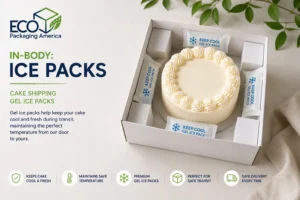
Ice packs and gel packs
Gel ice packs or frozen packs keep the inside of the box cool and stop buttercream, whipped cream, and chocolate from melting — especially useful in hot weather.
Insulated liners or thermal boxes
Insulated liners (foam or thermal foil) and thermal shipping boxes keep outside heat from getting in, helping the cake stay fresh for longer.
Extra care for perishable cakes
Cakes made with fresh cream, cream cheese, mousse, or fresh fruit spoil quickly — always ship these with cold packs and insulated packaging.
Shipping time matters
The shorter the shipping time, the fresher and safer the cake. Overnight or next-day shipping beats standard shipping for any perishable cake.
Weather & Your Location
Weather changes everything. A cake shipped from Miami, Florida in July needs far more insulation and extra gel packs than one shipped from Denver, Colorado in December. Shipping to a hot state like Texas, Arizona, or Florida? Add extra ice packs. In cooler states like Minnesota or Maine in winter, less cooling material may be enough.
Shipping Method & Carrier
Safe delivery isn’t only about packaging — the carrier matters just as much. Pick a courier that handles fragile items carefully and offers tracking, so you know where the cake is at every step, whether it’s crossing town or going from New York to Los Angeles.
If the cake contains fresh cream, fruit, mousse, or other perishables, choose overnight or next-day shipping. A shorter transit time means a fresher cake, lower risk of damage, and a better experience for the customer.
Cake Packing Do’s and Don’ts
Do
- Let the cake cool and fully set before packing, so decorations aren’t damaged.
- Pack on a sturdy, level surface so the cake stays straight and stable.
- Use clear labels — “Fragile,” “This Side Up,” and “Keep Refrigerated.”
- Seal the box properly with strong packing tape so it can’t open in transit.
Don’t
- Don’t pack without support — a cake with no board or inserts will shift and get damaged.
- Don’t use the wrong box size — too big or too small both increase movement and risk.
- Don’t expose it to heat or sunlight, or the frosting can melt.
- Don’t pack at the last minute — rushed packing leads to mistakes.
Common Mistakes to Avoid
Most cake-shipping problems come from small mistakes. The most common is not using enough padding, which lets the cake move and damages the frosting. Another is the wrong box — a weak box can’t handle the pressure of shipping, and one that’s too big lets the cake slide. Ignoring temperature control is the third big one: without insulation, gel packs, or cooling, heat melts frosting and spoils fresh ingredients fast. Avoid these and your cake arrives safe, fresh, and in perfect condition.

Expert Tips at a Glance
| Five things we tell every bakery shipping cakes
1. Start cold — chill perishable cakes fully; packaging holds cold, it doesn’t create it. 2. Board + non-slip mat + inserts + corner supports: use all four so the cake can’t move. 3. Double-wall corrugated for heavy or tiered cakes; grease-resistant coating always. 4. Keep dairy cakes out of the 40–140°F danger zone — gel packs + overnight shipping. 5. Label “Fragile / This Side Up / Keep Refrigerated” and use a carrier with tracking. |
Key Takeaways
- A cake is delicate, perishable, and temperature-sensitive — packaging protects it and holds the cold.
- Use a corrugated cake box (double-wall for heavy/tiered), sized just slightly larger than the cake.
- Hold the cake still with a board, non-slip mat, inserts, and corner supports.
- Keep dairy cakes below 40°F with gel packs and insulation; ship overnight when perishable.
- Match cooling to the weather and route; label the box and use a tracked carrier.
- Chill, secure, cushion, seal, and label — in that order — and plan ahead, never last-minute.
Pros & Cons of Shipping a Cake
| Pros | Cons |
| Keeps the cake safe — boxes, inserts, and cushioning lower damage risk | Higher packaging cost — quality boxes, inserts, and cooling add up |
| Maintains freshness — insulation and gel packs hold a safe temperature | Temperature risk — extreme heat or delays can affect a fresh cake |
| Protects decorations — support guards frosting, fondant, and details | Still fragile — rough handling always carries some risk |
| Reduces returns — secure packaging means fewer damaged deliveries | Limited shipping window — cream/fruit cakes need overnight or express |
| Improves the customer experience and drives repeat orders | Needs planning — box, cushioning, cooling, and carrier must all align |
Frequently Asked Questions
What is the best way to ship a cake safely?
Use a strong corrugated cake box, a sturdy cake board, protective inserts (corrugated or foam) with corner supports, cushioning material, and — for perishable cakes — gel ice packs and insulation, all inside a sturdy outer shipping box. Chill the cake first, seal every flap, and label it clearly. Pair that packaging with a tracked carrier and fast shipping, and the cake reaches the customer looking as good as the day it was baked.
What is the best box for shipping a cake?
A corrugated cardboard box is the best choice because it’s strong, light, and absorbs shocks well. Use a single-wall box for light, small cakes and a double-wall box for heavy or multi-tier cakes that need extra crush resistance. A regular thin cardboard box doesn’t offer enough protection for shipping. Look for a grease- and moisture-resistant coating so cream and oil don’t weaken the box during the trip.
What size box should I use to ship a cake?
The box should be a little bigger than the cake — enough room to add cushioning all around it, but not so much space that the cake can slide. Too big and it shifts and gets damaged; too small and there’s no room for protection. A snug fit with an inch or two of cushioning on each side, plus inserts and corner supports, keeps the cake centered and stable throughout the journey.
How do you stop a cake from moving inside the box?
Use four things together: a cake board fixed to the base, a non-slip mat under the board, foam or corrugated inserts around the cake, and corner supports to keep it centered. This combination holds the cake securely even during sudden turns or stops, protecting the frosting and decorations. Filling any empty space with cushioning material adds one more layer of protection against movement in transit.
Should a cake be refrigerated before shipping?
Yes — cakes with buttercream, whipped cream, cream cheese, or fresh fruit should be chilled until cold and fully set before packing. Starting cold matters because packaging only holds the cold you begin with; it doesn’t cool the cake down on its own. A firm, chilled cake also resists damage better, since the frosting and decorations are set rather than soft when the box is handled.
Are ice packs necessary for shipping a cake?
If the cake contains cream, dairy, or chocolate, gel ice packs are highly recommended — they keep the inside of the box cool and stop the frosting from melting, especially in warm weather. Fondant cakes with no dairy filling can often ship at a cool room temperature instead. Keep gel packs positioned so they don’t press directly into the frosting, and pair them with insulation for the best results.
Can a cake be shipped in hot weather?
Yes, but you’ll need insulated packaging, gel ice packs, and fast shipping — especially when shipping to a warm state like Texas, Florida, or Arizona. Add extra ice packs in summer, use a thermal liner or box, and choose overnight or next-day delivery so the cake spends as little time as possible in the heat. Try to hand the package to the carrier early in the day rather than letting it sit.
Is overnight shipping better for cakes?
Yes. Overnight or next-day shipping keeps the cake fresher and lowers the risk of damage, because the cake spends less time in transit and less time in the temperature danger zone. For any cake with fresh cream, fruit, or mousse, express shipping isn’t optional — it’s the only safe way to ship. Standard multi-day shipping is really only suitable for shelf-stable cakes with no perishable filling.
Can a fresh cream cake be shipped?
Yes, but only with the right setup: insulated packaging, gel ice packs, and express or overnight shipping. Fresh cream, cream cheese, mousse, and fresh-fruit cakes spoil quickly, so they must stay cold (below 40°F) for as much of the trip as possible. Chill the cake thoroughly before packing, add plenty of cooling, and ship early in the week so the package never sits in a warehouse over a weekend.
What labels should go on a cake shipping box?
Always add clear labels: “Fragile,” “This Side Up,” and “Keep Refrigerated.” These tell carriers and handlers to take extra care, keep the box upright, and understand the contents are perishable. Place labels where they’re easy to see on the top and sides. Clear labeling won’t guarantee gentle handling, but it noticeably improves the odds your cake is treated carefully at every stage of the journey.
What does a cake board do?
A cake board is the foundation of the cake. It gives the cake a strong, flat base and keeps it stable during lifting, handling, and transport, stopping the base from bending or the layers from shifting. For shipping, the board is fixed inside the box (on a non-slip mat) so the whole cake moves as one solid unit rather than flexing. It’s one of the simplest and most important pieces of cake-shipping support.
Can a cake be shipped in a normal cardboard box?
A regular, thin cardboard box doesn’t offer enough protection — it can crush or collapse under the pressure of shipping. A corrugated cake shipping box is a much safer choice because its fluted construction resists shocks and bumps. Pair the corrugated cake box with a sturdy outer shipping box, inserts, and cushioning for the best protection. Skimping on the box is the most common reason a cake arrives damaged.
What are the most common cake shipping mistakes?
The most common mistakes are using the wrong box size, not adding enough padding, sealing the box poorly, and ignoring temperature control. A box that’s too big lets the cake slide; too little padding lets it move; weak sealing lets the box open; and no cooling lets frosting melt and fresh ingredients spoil. Getting the box, cushioning, cooling, and carrier right together is what makes the difference between a perfect delivery and a damaged one.
What packaging materials do I need to ship a cake?
You’ll need a corrugated cake box, a cake board, foam or corrugated inserts, corner supports, a non-slip mat, cushioning material, gel ice packs (for perishable cakes), an insulated liner or thermal box for hot weather, strong packing tape, and a sturdy outer shipping box. Clear “Fragile / This Side Up / Keep Refrigerated” labels finish it off. Having everything ready before you start keeps the cake from warming up while you pack.
Conclusion
Shipping a cake safely comes down to a few simple steps: choose a strong corrugated box, use the right inserts and base support, keep the cake cool, and follow smart packing do’s and don’ts. Whether you’re shipping across town or coast to coast — from Seattle to Boston — the right packaging is the difference between a happy customer and a damaged delivery. Follow this guide and your cake can arrive anywhere in the USA as fresh and beautiful as the day it was made.
| Need cake shipping boxes and inserts?
At Eco Packaging America, we make corrugated cake shipping boxes, cake boards, and protective inserts — single- and double-wall, grease-resistant, with eco-friendly molded-pulp insert options — sized to your cakes, with low minimums and fast turnaround. Tell us your cake sizes and where you ship, and we’ll recommend the right setup and send a quote. Request your free cake shipping box quote today. |
About the Author
Eco Packaging America — Packaging Team. Custom Eco-Friendly Packaging Specialists for US Markets. With over 5 years of experience producing custom eco-friendly packaging for US food brands, bakeries, and e-commerce businesses, we’ve helped 200+ American brands create packaging that sells. We specialize in sustainable kraft, rigid, and mailer box solutions with low minimum orders and fast turnaround.